






What is Cocopeat? A complete guide to Cocopeat, its benefits, disadvantages, types, applications and how to use it
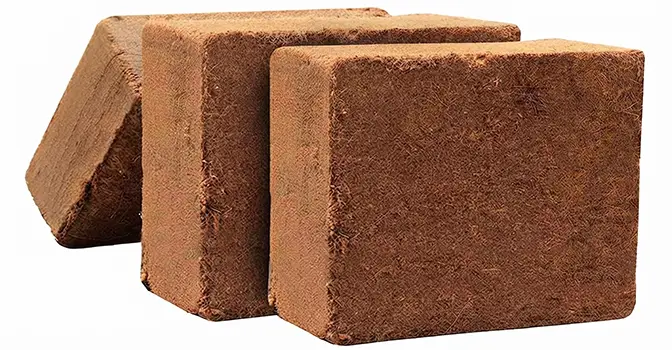
A type of cocopeat Growing Media It is an organic material produced from the fibers of the skin and outer covering of the coconut fruit. In the past, this part of the coconut was considered waste, but today, with industrial processing, it has become one of the most valuable cultivation media in the world. Today, cocopeat soil is widely used in the production of houseplants, ornamental flowers, greenhouse vegetables, hydroponic cultivation, seedling production, planting seeds in cocopeat, and rooting cuttings.
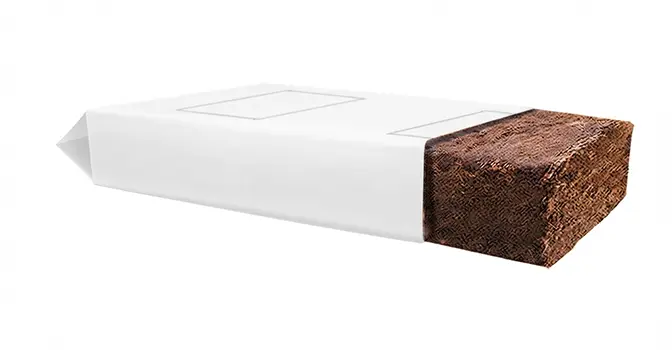
To produce cocopeat soil, the coconut husk is first soaked in water for a certain period of time to soften and separate the fibers. After this stage, the fibers, powder, and various particles are separated, dried, and finally packaged in the form of compressed blocks, molds, discs, or powder.
Compressed cocopeat expands several times its original volume when in contact with water. Typically, each kilogram of compressed cocopeat, after absorbing water, produces about 15 liters of wet bedding that is ready to use.
Main features of Cocopit
The appropriate physical and chemical properties have made cocopeat soil one of the best growing media.
The most important features of Cocopit are:
- Very high water retention capacity
- Its porosity is about 90 to 95 percent.
- Very light weight
- Neutral to slightly acidic pH (around 5.5 to 6.5)
- Long lasting between 4 and 10 years
- Free from weed seeds and many pathogens
- Environmentally friendly
- Can be used pure or in combination with other substrates
- Its EC is suitable and less than 0.5 mS/cm.
These same characteristics have led to cocopeat replacing heavy soils in many modern greenhouses.
| Features | Amount |
|---|---|
| pH | 5.5 to 6.5 |
| Water holding capacity | 8 to 10 times the dry weight |
| Porosity | 90 to 95 percent |
| Durability | 4 to 10 years |
| EC | Less than 0.5 mS/cm |
Why is cocopeat one of the best growing media?
-Maintaining humidity and saving water
– One of the most important benefits of cocopeat is its extraordinary ability to absorb and retain water. This substrate acts like a sponge, providing moisture to the roots for a long time.
– As a result, the plant experiences drought stress later and the frequency of irrigation is reduced. This feature is especially important in water-scarce areas and greenhouses.
– Proper root ventilation
– Unlike many heavy soils, cocopeat provides enough space for air to pass through, even when wet.
– Sufficient oxygen around the roots promotes better plant growth, reduced risk of rot, and proper development of the root system.
– Free from soil pests and diseases
– Because coconut fibers grow above the soil surface, cocopeat is usually free of weed seeds, soil-borne fungi, and many pathogens.
– High durability
– Unlike many organic substrates, cocopeat soil decomposes slowly.
– Environmentally friendly
– Cocopeat is produced from natural coconut waste and re-enters the natural cycle after its useful life ends. For this reason, it is considered a sustainable and environmentally friendly product.
Types of cocopeat
Cocopeat types can be classified by structure and particle size.
– Cocopit Pete
This type has very fine particles and the highest water holding capacity. It is usually used for seedling production and germination.
– Coconut fibers
Long fibers increase ventilation and better air circulation around the roots.
– Cocochips
Cocochips are made from coarse pieces of coconut husk and provide excellent drainage.
Types of cocopeat based on particle size
- Cocopeat fine; contains more than 85% peat and is suitable for seedling production.
- Medium cocopeat provides a good balance between water retention and ventilation.
- Cocochips; suitable for plants that need more drainage.
How to use Cocopit
Knowing how to use Cocopeat will help you get the best results from this substrate.
– First stage; preparation
Place the compressed cocopeat block in a suitable container and add water to it.
After a few minutes, the fibers separate and the volume of the coco coir increases several times.
– Second step; humidity adjustment
The cocopeat should be moist, but not waterlogged.
– Third stage; combination with other substrates
Although it is possible to use cocopeat in its pure form, for many plants it is better to combine it with other substrates. One common mixture in greenhouses is 50% cocopeat, 40% peat moss and 10% perlite. Of course, the exact ratio of this mixture can vary depending on the type of plant and growing conditions. For some plants, a ratio of 70% cocopeat and 30% peat moss is recommended.
Use of cocopeat
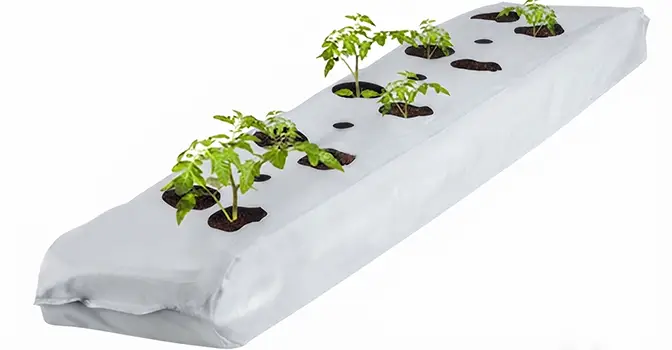
Due to its high water retention capacity, good ventilation, and long shelf life, cocopeat is used in many branches of agriculture, horticulture, and greenhouse farming. Its most important applications include:
- Seedling production
- Planting seeds
- Rooting of cuttings
- Soilless farming
- Hydroponic cultivation
- Soil amendment
- Growing cut flowers
- Vegetable cultivation
- Production of ornamental plants
- Mushroom cultivation
- Export of flowers and plants
Cocopit for houseplants
Cocopeat is a great choice for houseplants because it retains moisture for a long time and prevents soil compaction. Plants such as Ptosis, Sansevieria, Zamioculcas, Ficus, Spathiphyllum, Philodendron and many ornamental plants grow well in substrates containing cocopeat.
Planting seeds in cocopeat
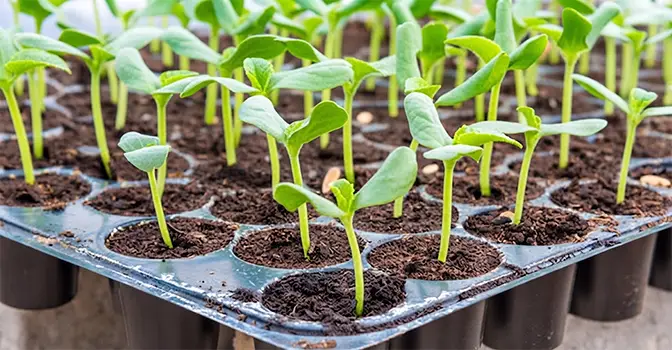
Planting seeds in cocopeat is one of the best methods of producing seedlings. To do this, first place the moist cocopeat inside. Seedling tray Or, pour a pot, place the seed at the appropriate depth, and keep the surface of the substrate moist with a water spray. Due to the maintenance of humidity and proper ventilation, the germination percentage in this substrate increases.
Rooting cuttings in cocopeat
Rooting cuttings in cocopeat is more successful due to the uniform moisture and sufficient oxygen. To do this, place the cutting in moist cocopeat and keep the substrate moist at all times to allow new roots to form.
The difference between coco peat and peat moss
-One of the common questions is the difference between cocopeat and Peat Moss It is.
– Cocopeat is produced from coconut husks, while peat moss is the result of the decomposition of plants in swampy areas.
– Cocopeat is more durable, decomposes more slowly, and provides better ventilation, while peat moss has a high capacity to retain moisture and organic matter.
– In many professional contexts, these two materials are used together.
The difference between cocopeat and perlite
Perlite is an expanded mineral that is mostly used to increase drainage and air circulation. In contrast, cocopeat retains more moisture. For this reason, a combination of cocopeat and perlite is one of the most common combinations for producing standard growing media.
Common mistakes when using CocoaPit
- Use without fertilizer
- Excessive watering
- Using salted cocopeat
- Overcompacting the substrate
- Use without rinsing in some products
| Features | Cocopeat | Peat Moss | Perlite |
|---|---|---|---|
| Water conservation | ⭐⭐⭐⭐⭐ | ⭐⭐⭐⭐ | ⭐⭐ |
| Ventilation | ⭐⭐⭐⭐ | ⭐⭐⭐ | ⭐⭐⭐⭐⭐ |
| Durability | ⭐⭐⭐⭐⭐ | ⭐⭐⭐ | ⭐⭐⭐⭐⭐ |
| Food | Low | Medium | No |
| Environmental compatibility | A lot | Medium | A lot |
Buying Cocopit and Important Tips for Choosing
When Buy Cocopit It is better to pay attention to the quality of the fibers, the level of salinity, the country of production, the type of processing and packaging of the product. If your goal is to produce plants professionally, choosing the best cocopeat with low EC and good quality is very important.
Also, when checking the price of cocopeat, it is better not to base it solely on price, but also check the quality of processing, texture, and salinity. Cocopeat sales centers usually offer fine, medium, chips, molded, and powdered varieties, each of which is suitable for a specific application.
Final words
Cocopeat is one of the most complete and practical organic growing media that has gained a special place in agriculture and horticulture due to its high water retention capacity, good ventilation, and long shelf life. Proper use of this medium, along with proper plant nutrition and choosing the right type for each crop’s needs, can provide optimal conditions for root growth, seed germination, and increased plant quality. If you are looking for a cocopeat growing medium with optimal performance, choosing a quality product and using it correctly will play an important role in achieving the desired result.
Frequently asked questions about Cocopit
1- What is cocopeat and what is its use?
Cocopeat is a type of organic growing medium made from the fibers and inner part of the coconut shell. This product is widely used in agriculture, greenhouses, hydroponic cultivation, and houseplant cultivation due to its high water retention, good ventilation, light weight, and environmental friendliness.
2- Is coco peat better or peat moss?
Both growing media have their own advantages. Cocopeat offers better ventilation, longer shelf life, and greater environmental sustainability, while peat moss provides more organic matter to the plant. In many professional growing media, a combination of the two produces the best results.
3- What is the difference between cocopeat and perlite?
Cocopeat retains moisture well, while perlite is used more to increase drainage and aeration of the growing medium. For this reason, the combination of cocopeat and perlite is one of the most common and effective combinations for growing many plants.
To read more about the characteristics of potting media and the role of cocopeat and peat moss, Iowa State University Guide to Growing Media Components See (in English).


