




Greenhouse Metal Hooks; A Comprehensive Guide to Selection, Application, Installation, and Maintenance in Plant Support Systems
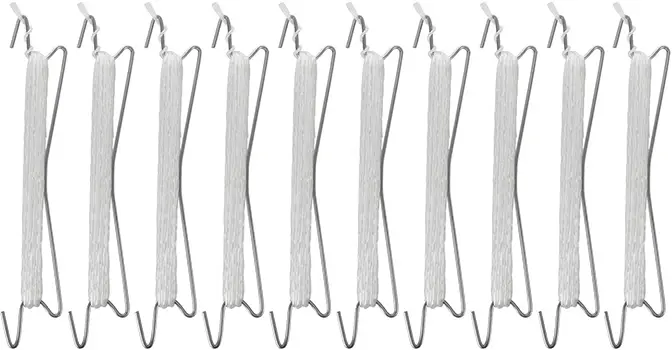
Greenhouse metal hook It is one of the important equipment in the system for maintaining vertically growing plants, which comes with Greenhouse yarn, plays an effective role in guiding the plant, increasing the productivity of the cultivation space and facilitating the operation and harvesting. This equipment, with its appropriate strength and resistance to moisture and corrosion, prevents the plant from bending and damage to the plant and helps to improve the quality of the product and reduce maintenance costs in the greenhouse. The correct selection of the hook according to the operating conditions plays an important role in increasing the durability and efficiency of the plant hanging system.
What is a greenhouse metal hook and what role does it play in the plant support system?
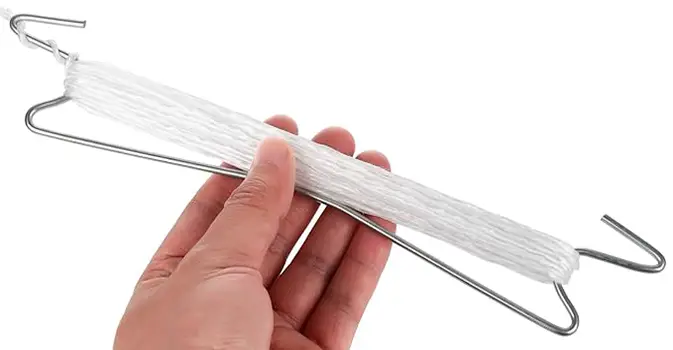
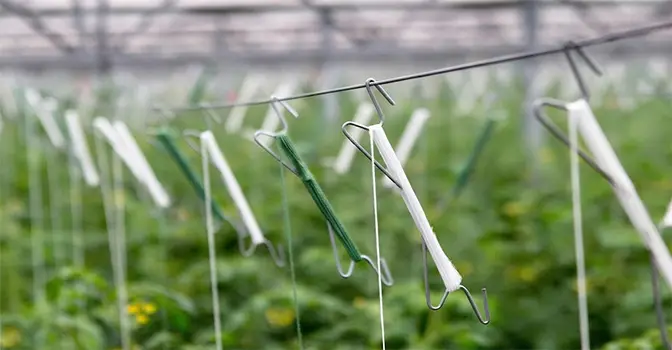
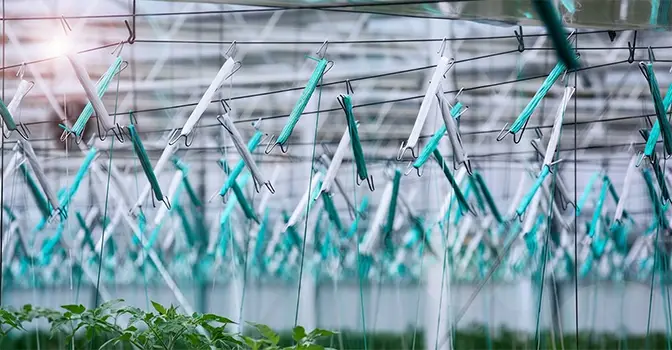
A greenhouse metal hook is a piece of wire or galvanized steel that is used with greenhouse twine to hold and guide vertically growing plants. By transferring the weight of the plant to the greenhouse structure, this equipment prevents stress on the stem and plant breakage, and allows the plant to be raised and lowered during the growth period. Choosing the right hook, installing it correctly, and using high-quality twine play an important role in increasing productivity, optimizing greenhouse space, and the durability of the plant maintenance system.
Categories and types of greenhouse metal hooks
Choosing the right plant support hook is one of the most important factors in designing a reliable support system for vertically growing plants. Although all greenhouse hooks are designed to hold the twine and transfer the weight of the plant to the greenhouse structure, they differ in shape, number of grooves, supply method, material, and application, which are essential for proper selection.
Single-groove metal hook
The single-groove hook is the most common model used in greenhouses for summer production. In this type, only one groove or path is provided for winding the twine, and the greenhouse twine is collected in an orderly manner on that groove. This model is usually made of galvanized steel wire of suitable diameter and is designed to hold medium-length twines.
Main application of single-groove hooks
- Tomato cultivation
- Cucumber cultivation
- Pepper cultivation
- Small and medium greenhouses
- Simple hanging systems
Advantages of single-groove hooks
- Simple design and easy to use
- Light weight
- Economical price
- Quick installation
- Occupies less space
- Suitable for most common greenhouses
Limitations of the single-groove hook
- Less capacity than the dual-purpose model
- Not suitable for very long threads
- Lower speed in the pot lowering operation
Suitable conditions for using a single-groove hook
For most projects, when the greenhouse string length is up to about 24 meters, using a single-groove hook is a good option. This model provides optimal performance for greenhouses of normal height and plants that require limited movement.
Double metal hook
The double-groove hook is an advanced version of the single-groove hook that provides two separate paths for thread placement, allowing for better thread volume management and faster plant height adjustment. In this model, the thread is divided between two grooves, making it easier to wind or unwind the thread.
The main application of the double hook
- Industrial greenhouses
- High-rise greenhouses
- Shrubs with a long growing season
- Intensive farming systems
Advantages of double hook
- Easier thread management
- Faster speed in pulling down the bush
- Reduces the chance of thread tangling
- More appropriate distribution of power
- Better performance in long-term crops
Limitations of the double hook
- More expensive than the single-slot model
- Slightly higher weight
- Requires more care during initial installation
Suitable conditions for using a double hook
When the length of the string is more than 24 meters or the height of the greenhouse is high, using a double-hook will be a more suitable choice. In these conditions, adjusting the plant height during the harvest season is done more quickly and accurately.
Important performance features of greenhouse metal hooks
In a standard plant support system, the plant suspension system is not just a simple connecting piece, but is part of a mechanical assembly that is responsible for transmitting force, stabilizing the greenhouse string, and allowing controlled plant movement. Therefore, when selecting this equipment, a set of technical and operational parameters must be evaluated so that the system’s performance does not deteriorate during the cultivation period.
Load-bearing capacity and mechanical performance
One of the most important evaluation indicators is the load-bearing capacity of the hook. Although the weight of a plant alone is not much, in the final stages of growth, the combined weight of the stem, leaves, fruit, twine, and forces from the harvesting operation imposes a significant load on the hanging system.
The hook must be able to withstand this load without permanent plastic deformation. Any bending, opening of the hook opening, or loss of wire strength is an indication of reduced safety and the need to replace the equipment.
Note that choosing a hook based solely on price, without considering the quality of the wire and mechanical strength, can lead to failure of the holding system and damage to the plants.
Material of metal hook
The material used plays a decisive role in the durability and performance of the hook. According to the reference text, the most common option is galvanized steel, which is considered the standard choice for greenhouse environments due to its good resistance to moisture and corrosion.
The hook material should be galvanized steel with a uniform coating to provide sufficient durability and resistance in the humid environment of the greenhouse. The quality of the galvanizing operation is very important because a uniform coating on the metal surface prevents the formation of corrosion-prone spots and increases the useful life of the equipment.
Durability and reusability of metal hooks
One of the important advantages of greenhouse metal hooks is their ability to be used in multiple growing seasons. Using high-quality galvanized steel and performing regular inspection and maintenance can extend the useful life of the hook and reduce equipment replacement costs.
Specialized applications of greenhouse metal hooks
Although the main function of this equipment is to hold the plants and greenhouse twine, its role in optimizing production processes goes beyond a simple connection. Proper use of greenhouse hooks has a direct impact on plant growth, crop quality, cultivation space management, and even greenhouse operating costs.
Maintaining Vertically Growing Plants: The most important use of metal hooks is to maintain plants that grow vertically. In this method, the plant is guided upwards with the help of greenhouse twine and its weight is transferred to the greenhouse structure through the hook. This method prevents the stem from bending and the fruit from coming into contact with the soil and provides suitable conditions for the plant to grow evenly.
Increase greenhouse space efficiency: In modern greenhouses, maximizing vertical space is of great importance. Metal hooks allow for the systematic guidance of plants and allow the operator to cultivate a larger number of plants in a given area. In addition to increasing production capacity, this also reduces production costs per unit of product.
Facilitates maintenance and harvesting operations: When plants are regularly placed on greenhouse trellises, various operations, including pruning, removing old leaves, pollination, pest control, and harvesting, are carried out more quickly and accurately. Easy access to all parts of the plant also reduces the risk of damage to the stems and fruit.
Improved ventilation and lighting: One of the common problems in dense cultivation is reduced air circulation and inadequate light penetration to the lower parts of the plant. The use of metal hooks and a standard hanging system allows the plants to be spaced and arranged properly, and improves air flow and light distribution throughout the greenhouse. In addition to increasing the quality of growth, these conditions also reduce the risk of fungal diseases caused by high humidity.
Criteria for selecting the right greenhouse metal hook
Choosing the right metal hook is not limited to the dimensions or price of the product. This equipment is part of the plant support system and should be evaluated in terms of strength, durability, quality of construction and compatibility with operating conditions. The wrong choice can increase maintenance costs, reduce the useful life of the equipment and even damage the plants.
At the time of selection, it is recommended that a set of technical and performance criteria be reviewed simultaneously.
1. Crop type and plant growth pattern
The first factor is the type of crop grown in the greenhouse. Each plant has different needs for a maintenance system depending on its final height, plant weight, and yield.
For example:
- Tomato plants gain significant weight at the end of the season and require a sturdy stake.
- Greenhouse cucumbers also require a system that allows for easy pull-down due to their rapid growth and continuous harvest.
- In products with a long growing period, hook durability becomes more important.
Therefore, the force-bearing capacity must be selected according to the actual operating conditions.
2. Wire quality and manufacturing process
One of the most important quality indicators is the type of wire used in the production of the hook. The wire must be made of appropriate quality steel to have sufficient resistance to tensile forces and continuous loads.
The characteristics of a standard wire are:
- Diameter uniformity
- Adequate tensile strength
- No surface cracks or cavities
- Resistance to bending
- Ability to withstand repeated use
It is essential to check the quality of construction, the uniformity of the bends, and the surface finish of the hook before purchasing.
3. Galvanized coating
Constant humidity in the greenhouse is one of the most important factors in causing corrosion in metal equipment. For this reason, the use of galvanized hooks is of particular importance. The galvanized coating must be uniform, without peeling and without damage; because any defect in the coating can accelerate the onset of corrosion. If the protective coating is damaged, the likelihood of corrosion starting in the same area increases.
4. Compatibility with greenhouse yarn
The hook must be fully compatible with the yarn used.
Standard greenhouse twine typically has the following characteristics:
- High tensile strength
- Presence of anti-UV materials
- Uniform thickness
- Adequate flexibility
If the surface of the hook has roughness or sharp edges, the likelihood of thread fraying and tearing increases.
5. Reusability
One of the economic advantages of metal hooks is that they can be used for multiple cropping seasons. A hook of good quality can be used for the next season after just cleaning and re-inspection at the end of each season.
The choice between different plant hanger models should be made based on the actual needs of the project, type of product, structure height, and plant management method.
| Features | Single-groove metal hook | Double metal hook |
|---|---|---|
| Main application | Maintaining plants in conventional greenhouses | Industrial and high-rise greenhouses |
| Structure | A groove for winding thread | Two separate grooves for better thread management |
| Suitable thread length | Up to about 24 meters | More than 24 meters |
| Bush lowering speed | Medium | Top |
| Yarn management | Simple | Easier and more organized |
| Possibility of thread tangling | More | Less |
| Operating capacity | Suitable for most greenhouses | Suitable for high-density cultivation |
| Initial cost | Less | More |
| Operational durability | Top | Very high |
| Terms of Use | Small and medium greenhouses | Large and industrial greenhouses |
Signs of damage and wear of metal hooks
Early detection of signs of damage prevents major damage. The most important signs of a hook that is out of standard condition are:
Permanent disfigurement
If the hook has been opened or bent from its original shape, its original strength has been reduced and should not be used again.
Severe rust
Although galvanized coating provides good corrosion resistance, if this coating is damaged, rust is possible.
Severe corrosion will reduce the effective surface area of the wire and reduce mechanical strength.
Surface cracks
Small cracks usually develop at bends or stress concentration points and increase the likelihood of complete failure of the hook if operation continues.
Thread contact area wear
With repeated use, the area where the thread meets the hook may become worn. This not only shortens the life of the hook, but also increases the chance of the thread breaking.
Reduction in the quality of galvanized coating
Peeling or loss of the protective coating is the first stage of corrosion. In such cases, it is best to replace the hook.
Preventive measures to extend the life of the hook
Implementing a few simple steps can significantly extend the useful life of your plant support hook.
The most important of these measures are:
- Use of hooks appropriate to the type of crop
- Choosing Standard Greenhouse Yarn
- Preventing the hook from being hit
- Prevent re-bending
- Store in a dry environment after the end of the season
- Periodic cleaning of hooks
- Avoid prolonged contact with corrosive substances.
- Conduct regular inspections throughout the growing season.
It is also recommended to store equipment in a classified manner so that installation operations can be completed more quickly when the new season begins.
Conclusion and implementation suggestions
The greenhouse metal hook is one of the key equipment in the plant maintenance system that helps to increase productivity and optimize the use of greenhouse space by properly guiding plant growth. Choosing a galvanized hook appropriate for the type of crop and using anti-UV thread increases the durability and efficiency of the hanging system. Also, regular inspection and maintenance of this equipment prevents breakdowns, reduces repair costs, and maintains production quality during different crop periods.
Frequently Asked Questions About Greenhouse Metal Hooks
1- What is a greenhouse metal hook and what is its use?
A greenhouse metal hook is a plant support equipment that is used in conjunction with greenhouse twine to guide, pull up, and pull down vertically growing plants, preventing the stem from bending or damaging them.
2- What is the difference between single-groove and double-groove metal hooks?
The single-groove hook is suitable for shorter strings and regular greenhouses, while the double-groove hook is used for longer strings, high greenhouses, and faster management of the plant pull-down operation.
3- What products are greenhouse metal hooks suitable for?
This hook can be used to hold tomato plants, cucumbers, peppers, eggplants, strawberries, and other vertically growing plants in a greenhouse.


