






What is a Spanish Greenhouse Structure? A Comprehensive Guide to Specifications, Benefits, Applications and Prices
The Spanish greenhouse structure is one of the most advanced and widely used types of greenhouse structures in modern agriculture, which has found a special place in greenhouse projects in Iran and the world due to its engineering design, high strength, and the ability to be equipped with smart systems. The Spanish greenhouse structure, by utilizing Gothic or circular roofs, proper natural ventilation, uniform lighting, and the ability to implement multiple openings, provides a standard environment for the production of agricultural products in all seasons. For this reason, many investors, farmers, and professional producers choose the Spanish greenhouse structure as a reliable option for economic and industrial production.
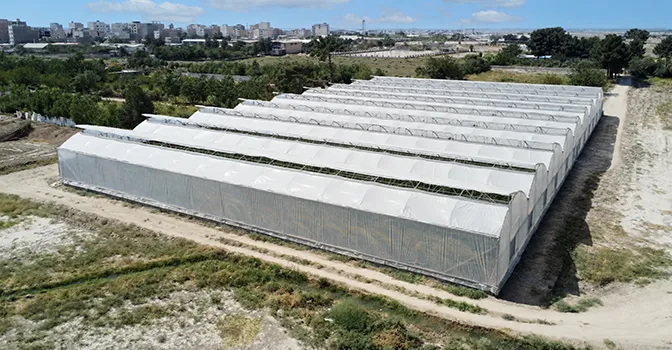
What is a Spanish greenhouse structure?
The Spanish greenhouse structure is one of the most common types of modern greenhouse structures, designed to increase production efficiency, improve natural ventilation, and create ideal conditions for plant growth. This structure is usually implemented as a multi-span structure, and its roof is designed in a Gothic or circular shape, in addition to high strength, to allow for rapid exit of hot air and prevent the accumulation of snow and rainwater.
Hot-dip galvanized steel profiles, durable pipes, multi-bent gutters, standard fittings, and polyethylene or polycarbonate greenhouse covers are used in the construction of this greenhouse. This makes the galvanized greenhouse structure highly resistant to moisture, corrosion, strong winds, and snow loads.
One of the most important features of the Spanish greenhouse is its complete customization. The dimensions of the opening, the height of the columns, the type of covering, the ventilation system, the cooling and heating equipment, and even the type of cultivation system are designed to suit the needs of the project. For this reason, this structure is used for small, medium and industrial projects.
Technical specifications of the Spanish greenhouse structure
One of the most important reasons for the popularity of the Spanish greenhouse structure is its standardized and engineered technical specifications. All components of this structure are designed with the aim of increasing strength, improving ventilation, reducing energy consumption and increasing lifespan.
The most important technical specifications of this structure are:
- Hot-dip galvanized steel frame
- Main columns 80×80 profile
- Column spacing 2.5, 3, 5, and 6 meters
- Opening width 8, 9.6 and 12.80 meters
- Column height 4 to 6 meters
- Crown height 6 to 8 meters
- The distance between the arches is 2.5 and 3 meters.
- Cover made of plastic greenhouse cover or polycarbonate greenhouse cover
- Automatic roof and side vents
- Galvanized multi-bend gutters
- Possibility of installing a smart fogging, heating, cooling and irrigation system
- Ability to implement hydroponic cultivation in a greenhouse
- Wind resistance up to about 110 to 130 km/h
- Adequate resistance to snow load according to structural design
This structure uses specialized connections such as paddle clamps, bow connectors, locking profiles, locking springs, crowbar clamps, rack and pinion, gutters, and galvanized bolts and nuts, which increase strength and ease of installation.
The large interior space, appropriate height, and standard design allow all types of mechanized equipment to be installed inside the greenhouse without restrictions, significantly increasing production efficiency.
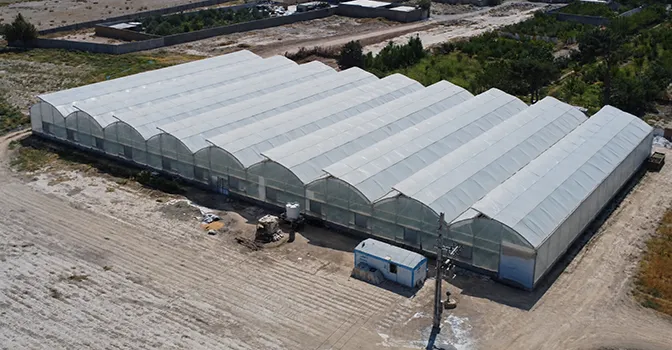
Features of the Spanish greenhouse structure
The Spanish greenhouse structure is considered one of the most complete types of industrial greenhouses due to its engineering structure, extensive facilities, and ability to adapt to different climatic conditions.
The most important features of this structure are:
- Multi-span design
- Gothic or circular roof with very good natural ventilation
- Uniform lighting throughout the greenhouse space
- Using high-strength hot-dip galvanized profiles
- Possibility of implementing hydroponic cultivation in a greenhouse
- Ability to install various types of smart equipment
- Possibility of using polyethylene or polycarbonate coating
- High resistance to wind, rain and snow
- Ability to expand and increase openings in the future
- Possibility of implementing projects in various dimensions
- Suitable for industrial and export production
- Ability to separate the interior space for growing different crops
- Possibility of installing thermal curtains, shades, foggers, fans, cellulose pads, and climate control systems
These features have allowed the Spanish greenhouse to increase production efficiency, reduce maintenance costs, and provide stable conditions for the growth of various agricultural products.
How is a Spanish greenhouse structure built?
The construction of a Spanish greenhouse is a fully engineered process that begins with the land survey stage and continues through equipment installation and full commissioning. The correct implementation of each stage has a direct impact on the structural strength, crop productivity, energy consumption and lifespan of the greenhouse. For this reason, the design and implementation of this type of structure must be carried out based on technical standards and in accordance with the climatic conditions of each region.
The process of building a Spanish greenhouse usually includes the following steps:
- Climate, topography and location selection
- Engineering design and preparation of executive drawings
- Obtaining the necessary permits
- Leveling the ground and preparing the bed
- Implementation of standard foundation
- Installation of columns, arches and braces
- Implementation of gutters and connections
- Installing plastic or polycarbonate covering
- Installation of mechanized equipment
- Final testing and project launch
Implementing these steps in a systematic manner will increase the structural strength of the Spanish greenhouse, reduce repair costs, and increase production efficiency in the years to come.
Spanish greenhouse structure installation method
The installation of the Spanish greenhouse structure is one of the most sensitive stages of the project implementation. Even if the best materials are used, substandard implementation can reduce the strength of the structure and increase maintenance costs. For this reason, the installation of this structure must be carried out by expert teams and in accordance with engineering drawings.
The main installation steps are:
- Execution of column plate and anchor bolt
- Installing the main columns
- Installing roof arches
- Implementation of longitudinal and transverse braces
- Gutter installation
- Installing roof and side vents
- Roof and wall covering implementation
- Installation of climate control equipment
- Final structural test
Accurate implementation of these steps will increase safety, proper sealing, and extend the useful life of the Spanish greenhouse.
What type of foundation is suitable for a Spanish greenhouse structure?
The foundation is the most important part of the Spanish greenhouse structure. It transfers all the loads from the weight of the structure, equipment, wind, snow, and lateral forces to the ground. Therefore, the quality of the foundation implementation plays a direct role in the durability and safety of the greenhouse.
Standard projects usually use reinforced concrete of appropriate grade, standard rebar placement, and galvanized anchor bolts. The depth, diameter, and spacing of foundations are also determined based on soil type, climatic conditions, structure dimensions, and design loads.
Common foundation specifications for Spanish greenhouse construction include the following:
- Concrete with a grade of 300 or more
- Using standard rebar
- Implementing anchor bolts to connect columns
- Depth about 80 to 110 cm.
- Approximate diameter 60 to 90 cm.
- Side foundation distance 2.5 meters
- Central foundation distance 5 meters
In less resistant soils, foundation design is done after soil testing to prevent possible settlement. Also, using appropriate equipment during excavation will preserve the soil structure and increase the strength of the concrete.
Advantages of Spanish greenhouse structure
The popularity of the Spanish greenhouse structure is not limited to its modern appearance, but rather a set of technical features that make this structure one of the best options for constructing industrial greenhouses.
The most important advantages of this structure are:
- Reducing energy costs
- Increasing the productivity of cultivated area
- Reduce maintenance costs
- Reducing energy consumption
- Increasing the possibility of mechanization
- Increasing project flexibility
- Suitability for commercial production
All these advantages have made purchasing a Spanish greenhouse structure an economical and long-term choice for investors and professional producers. The higher the quality of the materials and the execution of the project, the higher the return on investment.
Differences between the Spanish greenhouse structure and similar models
One of the most common questions when choosing a greenhouse is how the Spanish greenhouse structure differs from other common structures. Each model is designed for specific conditions, and the right choice depends on the climate, budget, type of crop, and production goals.
Spanish greenhouse structure and Gothic greenhouse
In many sources, the Gothic greenhouse is introduced as one of the models of the Spanish greenhouse. The main difference is in the number of openings and the scale of execution. The Gothic greenhouse is usually single-span, while the Spanish structure is often multi-span and is more suitable for industrial projects.
Spanish greenhouse structure and tunnel greenhouse
The tunnel greenhouse has a simpler structure, lower height, and lower implementation cost. In contrast, the Spanish greenhouse structure provides better natural ventilation, larger interior space, greater resistance, and the ability to install mechanized equipment.
Spanish greenhouse structure and Venlo greenhouse
The Venlo greenhouse is very similar in function to the Spanish model, but is usually made with glass and is more expensive to implement. In contrast, the Spanish greenhouse can also be made with polyethylene or polycarbonate and is a more economical option for many projects.
Spanish greenhouse structure and Type C greenhouse
The Type C greenhouse has a semicircular roof and is less resistant to wind and snow. However, the Spanish greenhouse structure with a Gothic or circular roof offers better ventilation, more adequate lighting, and greater strength.
| Features | Spanish structure | Tunnel greenhouse | Venlo Greenhouse | Iranian greenhouse |
|---|---|---|---|---|
| Strength | Very high | Medium | Very high | Medium |
| Natural ventilation | Excellent | Limited | Very good | Good |
| Useful height | A lot | Low | A lot | Medium |
| Mechanization capability | Very high | Limited | Very high | Medium |
| Implementation cost | Medium | Down | Top | Medium |
| Suitable for industrial production | Perfectly suitable | Limited | Very suitable | Suitable |
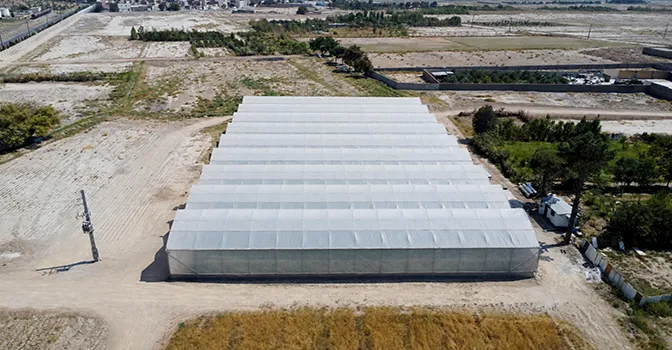
Overall, if the goal is to implement a modern greenhouse structure for commercial production, hydroponic cultivation, and long-term operation, the Spanish greenhouse structure will be one of the most complete options available.
Suitable cover for Spanish greenhouse structure
One of the most important factors affecting the performance of a Spanish greenhouse is the selection of the appropriate covering. Although the strength of the structure is of great importance, the quality and type of covering also directly affect the amount of incoming light, temperature control, reduction of energy consumption and ultimately crop yield. For this reason, when designing and implementing a Spanish greenhouse structure, a covering must be selected that is in complete harmony with the climatic conditions of the region and the type of crop.
Below, we will examine the most common covers used in this type of greenhouse.
Plastic cover (polyethylene)
The most common covering used in Spanish greenhouse construction is polyethylene greenhouse plastic. This covering is used in most commercial projects due to its affordable price, light weight, and easy installation.
The features of this coating include:
- High light transmission
- Resistance to UV rays
- Adequate flexibility
- Quick installation
- Low cost compared to other coverages
- Easy replacement capability
Today, most manufacturers use three- or five-layer plastics that have additives such as anti-UV, anti-fog, anti-dust, and light diffuser.
Polycarbonate coating
In some projects, especially greenhouses that require greater resistance to hail or strong winds, polycarbonate sheets are used. In addition to their high strength, these sheets are also considered good thermal insulation.
Advantages of polycarbonate:
- Very high mechanical resistance
- Reducing energy waste
- Long lifespan
- Impact resistance
- Adequate light transmission
Of course, the cost of implementing this coating is higher than plastic and is usually chosen for special projects or areas with harsh weather conditions.
Double layer plastic cover
In cold regions, a two-layer coating system is commonly used. In this method, compressed air is injected between two layers of plastic, which acts as an insulating layer.
The benefits of this system include:
- Reduce fuel consumption
- Better maintenance of temperature inside the greenhouse
- Reduce dew formation
- Increasing the strength of the coating against wind
Ventilation system in Spanish greenhouse structure
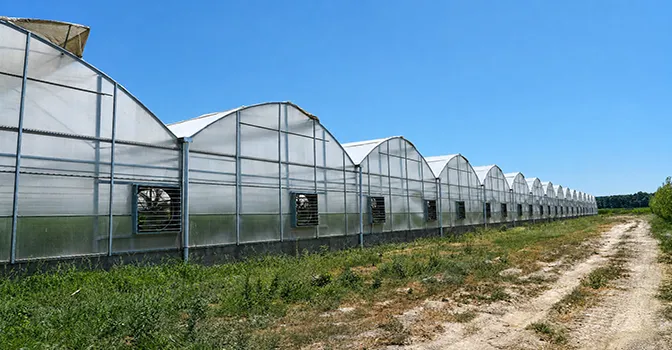
One of the reasons for the popularity of the Spanish greenhouse structure is the clever design of its natural ventilation system. Proper temperature and humidity control is one of the most important factors in the success of greenhouse production, and this structure allows for proper air circulation without requiring a lot of energy consumption.
In this type of greenhouse, several sections are usually considered for ventilation:
Ceiling ventilation
Roof vents are the most important route for hot air to escape. Since hot air moves upward, opening roof vents allows heat to escape quickly and reduces the temperature inside the greenhouse.
The benefits of ceiling ventilation include:
- Lowering the internal temperature
- Reduce excess moisture
- Preventing the spread of fungal diseases
- Improve air exchange
- Increased temperature uniformity
Side ventilation
In many Spanish structures, the side walls are also equipped with a vent or roll-up. This system allows fresh air to enter from below and hot air to exit from the ceiling, creating a natural air flow.
Mechanical ventilation
In advanced greenhouses, in addition to natural ventilation, mechanical equipment such as the following is also used:
- Exhaust fans
- Circulating fan
- Pad and fan
- Intelligent climate control systems
Combining this equipment with the Spanish greenhouse structure creates very stable environmental conditions for plant growth.
Heating and cooling system in a Spanish greenhouse
Although the design of this structure reduces temperature fluctuations, the use of heating and cooling equipment is essential for economic production throughout the year.
Heating systems
The most common heating equipment is:
- Cabinet heater
- Rocket heater
- Hot water boiler
- Environmental heating pipes
- Underfloor heating system
The choice of each system depends on the type of crop, the size of the greenhouse, and the climatic conditions of the region.
Cooling systems
The following equipment is usually used in the summer:
- Pad and fan
- High pressure fogger
- Circulating fan
- Shade curtains
- Intelligent temperature control system
The combination of this equipment with the appropriate height of the Spanish structure ensures that the temperature inside the greenhouse remains within the desired range even on very hot days.
Products suitable for cultivation in Spanish greenhouses
One of the most important advantages of this structure is the ability to grow a wide range of agricultural products. The high height, adequate lighting, effective ventilation, and the ability to install modern equipment make this type of greenhouse an ideal option for many economic products.
Cultivable crops include:
- Tomato
- Cucumber
- Bell pepper
- Eggplant
- Strawberry
- Lettuce
- Leafy vegetables
- Types of medicinal plants
- Cut flowers
- Ornamental plants
- Industrial seedlings
- Hydroponic products
Especially in tomato and bell pepper cultivation, the Spanish greenhouse structure is considered one of the best options for commercial production due to the possibility of installing wiring systems, plant hooks, misting, shade, and climate control equipment.
Factors affecting the price of Spanish greenhouse structures
One of the first questions buyers ask when implementing a project is how the price of a Spanish greenhouse structure is calculated. The truth is that there is no fixed price for this type of structure, as the final cost depends on a set of technical factors, the dimensions of the project and the equipment chosen.
Below, we will examine the most important factors determining the price of this structure.
1. Dimensions and area of the greenhouse
The main factor affecting the price is the size of the project. The larger the greenhouse area, the higher the steel consumption, fittings, coating, equipment, and installation costs.
Of course, in large projects, the total cost per square meter usually decreases because part of the fixed costs is divided among a larger area.
2. Type of profile and steel thickness
The strength of the structure depends on the quality of the steel profiles. Using thicker profiles or higher quality steel increases the strength of the structure but also increases the cost of construction.
In windy or snowy areas, heavier profiles are usually used so that the structure can perform properly against the incoming loads.
3. Type of greenhouse cover
The type of coverage also plays an important role in the final price. For example:
- Polyethylene plastic is the most economical option.
- Multilayer plastics with anti-UV, anti-fog, and light-diffusing additives cost more.
- Polycarbonate sheets cost more than plastic but offer better durability and insulation.
4. Galvanized quality
All metal parts of the structure must be resistant to moisture. Using hot-dip galvanizing with standard thickness significantly increases the life of the structure.
The higher the quality of the galvanized coating, the greater the structure’s resistance to rust and the lower maintenance costs in the years to come.
5. Peripheral equipment
A significant portion of the cost of running a greenhouse is related to internal equipment. Equipment such as:
- Misting system
- Pad and fan system
- Curtain
- Insect Netting
- Heating system
- Drip irrigation system
- Smart climate control equipment
- Electrical panels and sensors
Each of these pieces of equipment affects the final price of the project.
6. Conditions of the project implementation site
The cost of transporting parts, excavation operations, foundation construction, access to the project site, and the climatic conditions of the region also affect the final price of the structure.
For this reason, an accurate price is usually provided after visiting the project site and reviewing the employer’s needs.
Conclusion
The Spanish greenhouse structure is one of the most modern and widely used types of greenhouse structures, which has found a special place in modern agriculture due to its engineering design, high strength, effective natural ventilation, ability to install advanced equipment, and expansion possibilities. This structure, using galvanized steel, multi-span design, and resistant coatings, provides ideal conditions for producing high-quality products all year round.
Choosing the right dimensions, type of coating, heating and cooling systems, and ancillary equipment plays an important role in increasing productivity and reducing production costs. Also, collaborating with reputable manufacturers and using standard materials increases the useful life of the structure and accelerates the return on investment.
If you are planning to build an industrial greenhouse with high performance, long durability and future expansion potential, the Spanish greenhouse structure can be one of the best options for investing in the agricultural sector. By providing a stable and controllable environment, this type of structure enables the continuous production of high-quality products in different climatic conditions and plays an important role in the development of modern agriculture and increasing productivity.
Frequently Asked Questions About Spanish Greenhouse
1- What is a Spanish greenhouse structure?
The Spanish greenhouse structure is a type of multi-span greenhouse with a sloping roof that is made of galvanized steel. It is considered one of the most widely used greenhouse structures in Iran and the world due to its high strength, proper natural ventilation, and ability to install modern equipment.
2- What is the most important advantage of the Spanish greenhouse structure?
The most important advantage of this structure is the combination of high strength, effective natural ventilation, adequate lighting, and the possibility of complete mechanization. These features increase crop yield and reduce maintenance costs.
3- What is the best covering for a Spanish greenhouse structure?
Most commercial projects use UV-resistant, multi-layer polyethylene plastic. In some special projects, polycarbonate sheets are used due to their greater strength and better thermal insulation.
To review the implementation options, page Greenhouse Structures See. You can also Greenhouse equipment and Glass Greenhouse Guide Check out to compare and choose the one that suits your project.


