





Seedling Trays; A Comprehensive Guide to Selecting, Using, and Examining Types of Seed Growing Trays in the Greenhouse
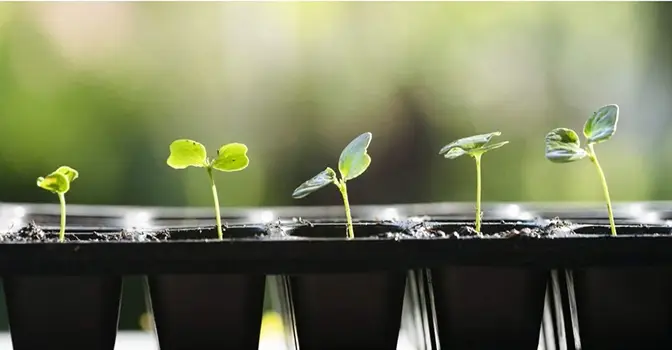
The use of seedling trays in modern agriculture and greenhouse crop production has become one of the common methods for producing healthy and uniform seedlings. By providing a controlled environment for germination and initial plant growth, the seedling tray or seed tray provides suitable conditions for root development, reducing plant stress, and easy transfer of seedlings to the main field. In addition to increasing production efficiency, this method also allows for better management of irrigation, nutrition, and disease control.
Today, greenhouse seedling trays are used in the production of various vegetables, garden crops, ornamental plants and many agricultural products. The correct selection of the type of tray, the number of cells, the material of the body and the cultivation medium has a direct impact on the quality of the seedling, the speed of root growth and the success rate of plant transfer. In this article, the types of seedling trays, technical specifications, the method of planting seeds in the seedling tray, the appropriate soil for the seedling tray, important points in the selection and use, the advantages and factors affecting the price of the seedling tray are comprehensively reviewed.
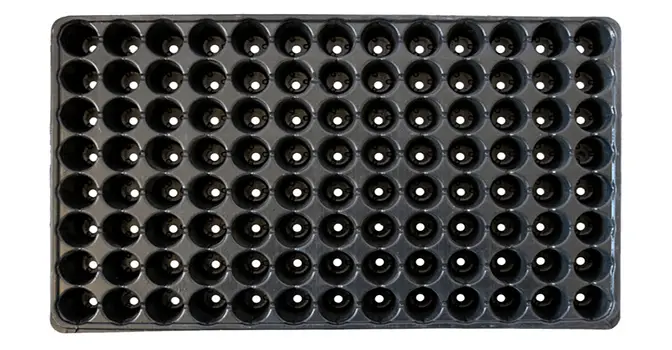
What is a seedling tray?
Transplant trays are usually made of polymer or polyethylene materials and, depending on the design, are reusable or disposable. Some models also have a UV-resistant coating that increases their durability in greenhouse conditions.
The most important structural features of this product include the following:
- Has separate cells for independent growth of each plant
- Suitable for producing all kinds of vegetable and horticultural seedlings.
- Has a suitable drain for excess water to drain out.
- Can be used in greenhouses and controlled environments
- Possibility of easy transplanting without damaging the roots
- Produced in various sizes and cell counts
Applications of seedling trays
The use of seed trays is not limited to greenhouse seedling production, but is also widely used in many modern cultivation systems. This product is used in commercial crop production, greenhouse production, and even home gardening due to better control of growing conditions.
In this method, each seed is placed in an independent cell, which reduces competition between plants and allows for proper root growth. This feature ensures that the transplant to the main soil is transferred with minimal stress.
The most important uses of the seedling tray are:
- Production of cucumber seedlings
- Tomato seedling production
- Pepper seed cultivation
- Watermelon seedling production
- Melon seedling production
- Cultivation of cabbage varieties
- Lettuce seedling production
- Onion seedling production
- Eggplant seedling production
- Broccoli cultivation
- Production of ornamental flower seedlings
- Cultivation of some medicinal plants
- Strawberry runner production in deeper trays
- Preparing the plant for transfer to the field
In addition to producing seedlings, using a growing tray also allows for better management of greenhouse space. Placing a large number of plants in a limited space allows for precise planning for irrigation, fertilization, and movement, increasing production efficiency.
Types of seedling trays
Types of seedling trays can be categorized based on material, reusability, and number of cells. The choice of each model should be made according to the type of plant, the length of time the seedling will be kept, and the environmental conditions.
Polyethylene seedling tray
Polyethylene seedling trays are one of the most common types of cultivation trays in greenhouses. This model is made of flexible polyethylene and has good resistance to breakage. Due to the flexibility of the body, it is easier to remove seedlings from the cells without damaging the roots.
The features of this type of tray include:
- Reusable
- High flexibility
- Good resistance to disinfectants
- Possibility of washing after each cultivation period
- Suitable for use in greenhouses
Reusable seedling tray
Reusable seedling trays are usually made of polyethylene or resistant polymers and can be washed and disinfected after each cultivation period. Reusing these trays is possible if hygiene principles are observed, reducing the cost of equipment in subsequent periods.
To reuse this type of tray, you will need:
- The remains of the growing medium should be completely removed.
- The tray can be washed with water or steam.
- Use a disinfectant solution if necessary.
- Dry completely before reusing.
Expanded polystyrene (EPS) seedling tray
The Unolite seedling tray is made of Unolite or compressed polystyrene. This type of tray is lightweight and usually has a lower initial cost than polyethylene models.
Features of this model include the following:
- Low weight
- Proper moisture retention
- Economical price
- Suitable for some resistant plants
- More brittle than polyethylene
Due to their relatively hard structure, removing seedlings from these trays requires more care to avoid damaging the roots.
Disposable tray
Disposable trays are usually made of polystyrene and are mostly used for short periods of seedling production. These trays are not usually reused after the cultivation period is over.
The features of this model include the following:
- Light weight.
- Lower initial cost.
- Suitable for some seasonal crops.
- Less impact resistance.
- Suitable for mass production in some manufacturing units.
| Tray type | Reusable | Durability | Price |
|---|---|---|---|
| Polyethylene | ✓ | A lot | Medium |
| Unolith | ✗ | Medium | Low |
| Polystyrene | ✗ | Low | Cheap |
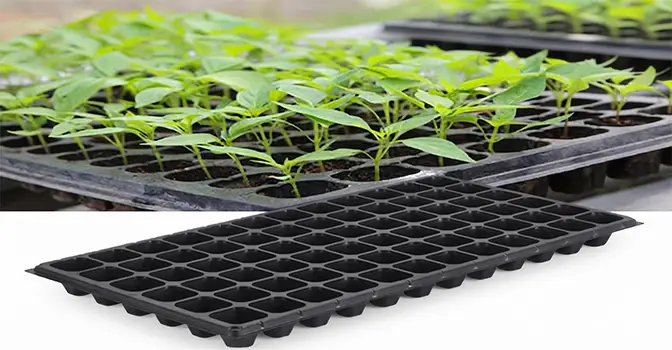
Types of seedling trays based on the number of cells
One of the most important criteria for choosing a seed tray is the number of cells. The higher the number of cells, the smaller the volume of each cell and is more suitable for plants with a short growth period.
Common models include:
- 24-hole seedling tray
- 28-hole seedling tray
- 32-hole seedling tray
- 45-hole seedling tray
- 50-hole seedling tray
- 70-hole seedling tray
- 104-cell transplant tray
- 128-cell seedling tray
- 160-cell seedling tray
- 200-hole seedling tray
104-cell transplant tray
The 104-cell seedling tray is one of the most widely used models in vegetable seedling production. This model provides a good balance between cell volume and seedling number and is a good choice for plants that need more root space.
128-cell seedling tray
The 128-cell seedling tray is one of the most common models used in greenhouses. This model, with a higher number of cells, allows for the production of a higher number of seedlings in the same space and is used for many crops and greenhouses. In many models of the 128-cell seedling tray, ventilation grooves are designed in the bottom of the cells, which improve drainage, root ventilation and reduce the likelihood of fungal diseases.
Benefits of seedling trays
The benefits of seedling trays are not limited to ease of planting, but this product plays an important role in increasing production efficiency, reducing resource consumption, and improving seedling quality. For this reason, the use of seed trays has become a standard practice in many greenhouses and seedling production units.
Growing seedlings in a controlled environment allows environmental factors such as temperature, humidity, nutrition, and light to be more carefully managed. This ultimately results in healthier, more uniform plants.
- Increasing seed germination percentage
- Reducing losses in the early stages of growth
- Reducing stress during transplanting
- Increasing the quality of the root system
- Preventing roots from becoming entangled
- Better irrigation control
- Reducing water consumption
- Reducing fertilizer use
- Reducing energy consumption
- Reducing the need for manpower
- Saving greenhouse space
- Increasing production efficiency
- Production of uniform seedlings
- Better control of soil-borne diseases
- Reduces the risk of root rot
- Improve ventilation around the roots
- Possibility of easy relocation of the plant
- Suitable for mechanized cultivation
- Reusable in polyethylene models
- Speeding up the preparation of seedlings for transfer
How the seedling tray works
Greenhouse seedling trays provide a controlled environment for germination and early plant growth. Each cell acts like a small pot, and the seed grows in its own independent space. This separation prevents the roots from becoming entangled and makes it much easier to move the plant.
After planting the seed, the roots develop in the cell space and gradually occupy the entire volume of the growing medium. The presence of drainage holes in the bottom of the cell allows excess water to drain and prevents moisture accumulation. Also, the entry of air from the bottom of the cell ensures proper oxygenation to the roots.
This condition causes:
- Root growth is more uniform.
- Reduce the risk of root rot
- Fungal diseases spread less.
- Transplanting should be done with minimal stress.
- Increase the percentage of plant establishment in the main land
In greenhouses, seedling trays are usually kept until the plant reaches the appropriate growth stage and then transferred to the field or main pot at the appropriate time.
How to use the seedling tray
Proper use of seedling trays has a direct impact on the quality of seedling production. Following the order of planting steps, choosing the right substrate, and managing irrigation properly will increase the germination percentage and produce healthy plants.
Before planting, it is necessary to check the condition of the seeds. Some seeds need to be soaked in water to speed up germination, while others should be sown directly. The type of plant will determine the method of seed preparation.
How to plant seeds in a seedling tray
The method of planting seeds in the seedling tray should be done according to the type of plant to provide optimal conditions for germination. Planting depth, number of seeds per cell, and irrigation method are important factors at this stage.
It is best to test the seeds for germination first. One simple method is to soak the seeds in water for about 15 minutes. Seeds that sink to the bottom of the container usually have better germination, while seeds that float may be of lower quality.
Another method is to place a few seeds in a damp cloth or towel in a warm environment for a few days. If you see sprouts, the seeds are ready to be planted.
The planting steps include:
- Preparing the planting bed
- Completely filling the cells
- Creating a hole with a depth appropriate to the size of the seed
- Placing one seed in each cell
- Use two seeds for very small seeds if needed.
- Covering the seeds with the planting medium
- Perform initial irrigation
- Transferring the tray to an environment suitable for temperature and humidity
For most plants, the planting depth is considered to be about twice the diameter of the seed. However, some seeds require light to germinate and should be placed close to the surface of the substrate.
Suitable soil for seedling trays
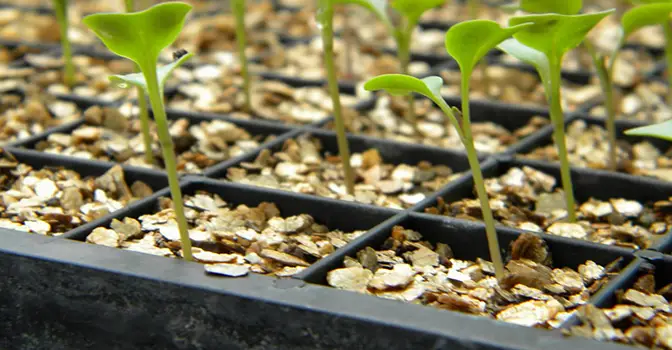
Choosing the right soil for your seedling tray is one of the most important factors in successful seedling production. The growing medium should be light, sterile, well-drained, and able to retain moisture. The use of farm soil or sand is generally not recommended, as these materials may be contaminated or not well-ventilated.
In addition to maintaining moisture, a suitable substrate should provide enough space for root development and prevent over-compression. Also, the presence of appropriate organic matter will promote better plant growth in the early stages.
Suitable substrates for seed trays
- Cocopeat
- Sterile peat moss
- Peat moss and cocopeat mixture
- Perlite
- Vermiculite
- A combination of cocopeat, perlite and vermiculite
Cocopeat
Cocopeat It is made from coconut husk fibers and has a high ability to retain moisture. This substrate is lightweight and provides good ventilation for the roots. Since cocopeat has limited nutrients, it is usually used in conjunction with nutrient solutions.
Peat Moss
Peat Moss It is one of the most common growing media in seedling production. This material has a high water retention capacity and, because it is sterile, reduces the possibility of disease transmission.
Perlite
Perlite is a lightweight mineral that increases the porosity of the substrate and improves aeration. Using it alongside peat moss or cocopeat will provide the right balance between water retention and excess moisture release.
Vermiculite
While retaining moisture, vermiculite also increases nutrient retention capacity and helps with better root growth.
Important points when using a seedling tray
Following a few simple tips can significantly increase the quality of seedling production. Many of the problems seen in greenhouses are caused by improper tray selection or improper use of growing media.
The most important points when using a planting tray
- Do not use farm soil to fill the tray.
- The culture medium must be sterile.
- Avoid excessive watering.
- Maintain proper ventilation in the greenhouse.
- The ambient temperature should be adjusted according to the type of plant.
- Provide enough light for the seedlings to grow.
- Avoid premature removal of seedlings from the tray.
- Place the trays on a flat surface.
- Damaged cells are not reused.
Disinfection of the transplant tray
Disinfection is very important if reusable seedling trays are reused. Remaining litter or pathogens can cause disease transmission to the next crop.
Common disinfection methods include:
- Washing with water
- Using steam
- Use of approved disinfectant solutions
- Dry completely before reusing.
Seedling tray selection guide
Choosing the right seedling tray has a direct impact on seedling quality, root growth rate, and production costs. Each plant has different growing conditions, and for this reason, one type of tray cannot be used for all crops.
When choosing a seed tray, several important factors should be considered.
Plant type
Different plants require different volumes of substrate.
For example:
- Cucumbers need larger cells.
- Strawberries do well in deep trays.
- Ornamental flowers are usually produced in small cell trays.
Number of cells
The more cells there are:
- The number of seedlings increases.
- The volume of each cell decreases.
- The storage period for seedlings should be shorter.
Cell depth
Deep cells have several advantages.
Including:
- Better root development
- Save more water
- Reduce transplant stress
- More uniform plant growth
Tray material
When choosing the tray material, the conditions of use must also be considered.
Typically:
- Polyethylene seedling trays are suitable for multiple use.
- The Unolith seedling tray has a lower initial cost.
- Disposable trays are mostly used in mass production.
Tray color
The color of the tray also affects the plant’s growth conditions.
Dark trays:
- They absorb more heat.
- Accelerates early growth
- They are more useful in greenhouse environments.
In contrast, clear trays absorb less heat and may be a better choice in very hot areas.
Factors affecting the price of seedling trays
The price of a seedling tray is affected by various factors and it is not possible to consider a fixed price for all models. The differences in raw materials, number of cells, reusability, and quality of construction are the most important factors determining the price.
The most important factors affecting the price of a seedling tray are:
- Tray material
- Quality of raw materials
- Number of cells
- Cell depth
- Tray dimensions
- Reusable
- Resistance to UV rays
- Molding quality
- Body thickness
- Brand and production standard
When considering the price of a seedling tray, it is best to consider not only the initial cost, but also the lifespan, reusability, and maintenance costs.
Conclusion
Seedling trays are an essential piece of equipment in the production of seedlings in greenhouses and modern agricultural systems. The use of seedling trays and seed trays enables the production of uniform, healthy, and high-quality seedlings and creates suitable conditions for the initial growth of the plant and its easy transfer to the main field.
Choosing the right type of seedling tray, paying attention to the type of crop, the number and depth of the cells, using the right soil for the seedling tray, observing the principles of seed planting in the seedling tray, and proper irrigation management play an important role in increasing production efficiency and reducing plant losses. Also, examining factors such as Buy a seedling trayThe price of a seedling tray, choosing a polyethylene seedling tray or a monolith seedling tray, using a reusable seedling tray, and choosing models such as a 104-cell seedling tray or a 128-cell seedling tray should be based on the needs of the crop, the type of plant, and the production conditions to achieve the best results in the seedling production process.
Frequently Asked Questions about Seedling Trays
1- What is a seedling tray and what is its use?
A seedling tray or seed tray is a container with separate cells for sowing seeds and producing seedlings. These trays provide suitable conditions for germination, initial root growth, and easy transfer of the plant to the main soil or pot, and are used in the production of various vegetables, garden crops, ornamental plants, and some medicinal plants.
2- What is the best seedling tray for growing vegetables and herbs?
Choosing the best tray depends on the type of plant. For many vegetables, such as tomatoes, peppers, and eggplant, 104- or 128-cell trays are good options. For plants with stronger roots, such as cucumbers and watermelons, it is recommended to use trays with larger, deeper cells.
3- What is the difference between 104 and 128 cell transplant trays?
The main difference between the two models is the number and volume of cells. The 104-cell seedling tray has larger cells and provides more space for root growth, while the 128-cell tray produces more seedlings in the same space and is better suited for plants with a shorter growth period.


