






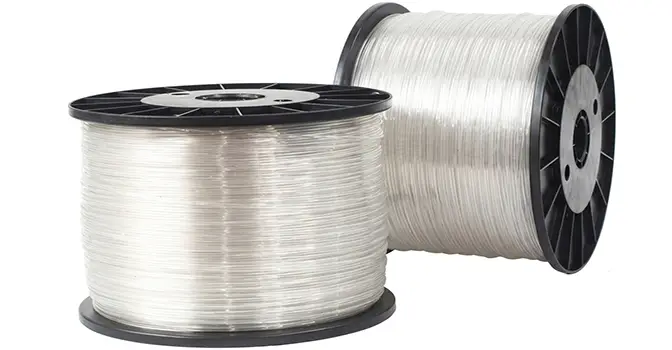
Greenhouse polyester wire; a modern alternative to metal wire in greenhouse systems
Transparent wire or Greenhouse Polyester Wire It is one of the most important greenhouse equipment used for maintaining the greenhouse cover, implementing the greenhouse mechanized shade system, and installing various types of Canopy This product, also known as PET WIRE, is made from synthetic polyester fibers and is known as a suitable replacement for galvanized wire, metal wire, and various types of nylon wire due to its mechanical and chemical properties.
Polyester is a polymer material that is made up of strong molecular chains, and this structure provides the product with high tensile strength, low weight, and good resistance to environmental factors. For this reason, polyester wire is used in many modern greenhouses, especially Spanish and Dutch greenhouses, as a retaining wire in the greenhouse cover and in the implementation of shading systems.
In addition, polyester wire, using anti-UV additives, is designed for use in both indoor and outdoor greenhouse environments and has stable performance against sunlight, moisture, chemicals, and temperature changes.
This product is known by various names in the greenhouse equipment market, all of which refer to the same group of products, including:
- Greenhouse Polyester Wire
- Polyester Support Wire
- PET WIRE
- Transparent wire
- Polyester Support Wire
- Wire mesh
- Awning retaining wire
- Greenhouse retaining wire
- Greenhouse plastic wire
- Energy storage wire
- Agropet wire
The use of these names is common in various markets, and depending on the type of application, sellers or manufacturers may use one of these titles.
Main applications of polyester wire
Greenhouse polyester wire is designed for a wide range of greenhouse applications and plays an important role in increasing the durability and performance of the structure.
The most important uses of this product are:
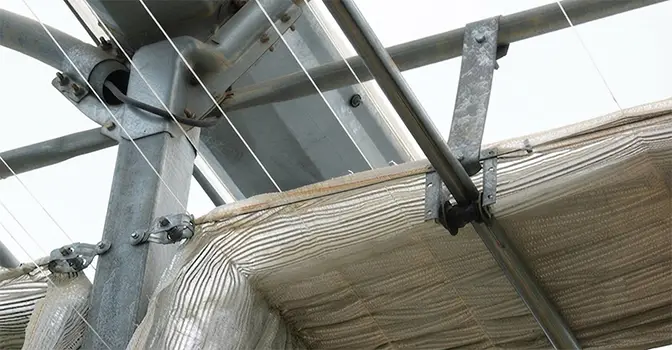
- Use in a greenhouse mechanized shade system
- Implementation of movable awning systems
- Maintaining and stabilizing greenhouse cover
- Installing greenhouse nylon
- Use as greenhouse retaining wire
- Greenhouse plastic wire installation
- Use in Spanish greenhouses
- Use in Dutch greenhouses
- Use in high humidity environments
- Use in environments exposed to pesticides and chemical fertilizers
Due to its good tensile strength, this product maintains its original shape after proper installation and adjustment and does not sag or deform.
The most important advantages of transparent wire
- Very low weight
- High tensile strength
- Very low moisture absorption
- Resistance to UV rays
- Resistance to insecticides and chemicals
- Lack of heat transfer to greenhouse nylon
- No rust or corrosion
- Quick and easy installation
- Maintaining elasticity in summer and winter
- Approximately three times longer service life than metal wire
- Suitable for use inside and outside the greenhouse.
- Safe for plants and animals
– The weight of polyester wire is about one-sixth that of greenhouse metal wire. Due to the low density of polyester, much less load is applied to the structure, making it easier to transport, move, and install the product.
– This product has good tensile strength. The durable polyester structure ensures that the wire remains taut after installation and does not sag over time.
– Polyester wire absorbs much less moisture than metal wire and regular nylon wire. Therefore, its mechanical properties are maintained in humid environments and the need for repair and replacement is reduced.
– The presence of anti-UV additives ensures that the polymer structure remains stable against sunlight, making the product suitable for long-term use outdoors and inside greenhouses.
– This product has good resistance to insecticides, fertilizers, and other common chemicals in greenhouses. Therefore, its quality is maintained in agricultural environments and it will have a longer useful life.
– Unlike galvanized wire, polyester has much lower thermal conductivity. Therefore, heat from sunlight is not transferred to the greenhouse nylon, reducing the risk of damage to the greenhouse cover.
– This product is non-corrosive. Due to its polymer structure, it does not rust when in contact with water and moisture, and as a result, its appearance and performance will be maintained over time.
– The low coefficient of expansion of polyester ensures that, once properly installed, the wire does not sag or shrink in the heat of summer or the cold of winter, thus minimizing the need for readjustment.
– According to the product specifications, the useful life of greenhouse polyester wire is about three times longer than metal wire. Therefore, the frequency of replacement will be reduced and the system maintenance costs will be lower.
– The smooth surface of the transparent wire has no sharp edges. This reduces the risk of damage to the stems, leaves, and other sensitive plant tissues, providing more suitable conditions for plant growth.
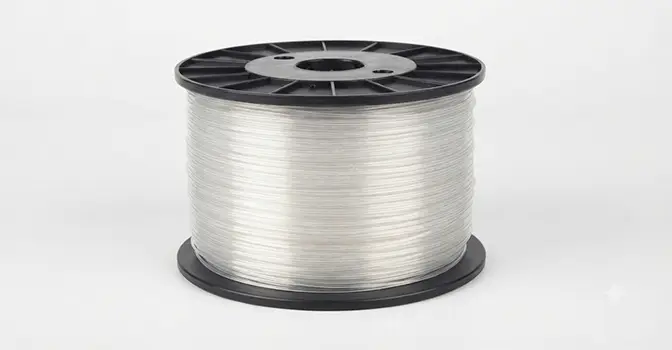
Comparing Clear Wire with Common Market Alternatives
Comparison with metal wire
Although metal greenhouse wire has high mechanical strength, it weighs more, is susceptible to corrosion from moisture, and transmits heat to the greenhouse cover. On the other hand, polyester greenhouse wire weighs much less, does not rust, does not transmit heat, and offers a longer service life.
Comparison with galvanized wire
Galvanized wire is more resistant to rust than regular wire, but it is still a heat conductor and can cause heat transfer to nylon in greenhouse environments. In contrast, PET WIRE is more insulating due to its polymeric nature and does not cause this problem.
Comparison with nylon wire
Regular nylon wire is less resistant to some environmental conditions than polyester wire. In addition, it has a higher moisture absorption rate and is not as durable in long-term use as polyester wire. Therefore, polyester wire is a better choice for permanent greenhouse applications.
Comparison with steel wire
Steel wire is stronger than polyester wire in terms of absolute strength and is used for heavy structures. However, in greenhouse equipment, the main requirement is not only strength, but also moisture resistance, low weight, no heat transfer, chemical resistance and high durability. For this reason, polyester wire is a more suitable option for specialized greenhouse applications.
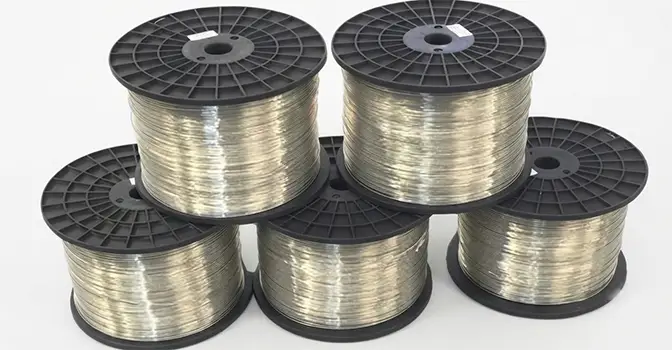
Conclusion
Greenhouse polyester wire or transparent wire is a specialized product for use in a variety of greenhouse structures that, by utilizing a polyester structure, provides stable and reliable performance in various environmental conditions. This product is known by names such as PET WIRE, shade wire, polyester wire and canopy retaining wire and is used today as an efficient replacement for galvanized wire and other metal wires.
Due to its low weight, installation is faster and less stress is placed on the structure. Also, due to its high resistance to tensile, moisture, UV rays and chemicals, the durability of the product is increased and the need for periodic maintenance is reduced. In addition, the lack of heat transfer to the greenhouse cover prevents damage to the greenhouse nylon and helps maintain the quality of the equipment.
As a result, using polyester wire not only increases the lifespan of greenhouse equipment, but also reduces maintenance costs, simplifies the installation process, and is considered an economically viable and suitable choice for greenhouse operators.
Frequently Asked Questions about Transparent Wire (Greenhouse Polyester Wire)
1- What is greenhouse polyester wire (transparent wire)?
Transparent wire or greenhouse polyester wire (PET WIRE) is a type of polymer wire made of polyester that is designed for use in greenhouse mechanized shade systems, greenhouse cover installation, and greenhouse nylon maintenance. This product is considered an efficient replacement for wire and metal wires due to its low weight, high tensile strength, and good durability.
2- What is the most important application of polyester wire?
The most important use of polyester wire is in the greenhouse mechanized shade system, installing greenhouse nylon, stabilizing greenhouse cover, and implementing retaining systems. It is also widely used in Spanish and Dutch greenhouses as a retaining wire for greenhouse structures and covers.
3- Is polyester wire a good alternative to metal wire?
Yes. Polyester greenhouse wire has replaced metal wire and galvanized wire in many greenhouse applications due to its much lighter weight, high resistance to moisture, chemicals and UV rays. In addition, it does not transfer heat to the plastic greenhouse covering, helping to extend its lifespan.


