




Greenhouse insect screen; a comprehensive guide to selection, performance, technical specifications, and application in integrated pest management (IPM)
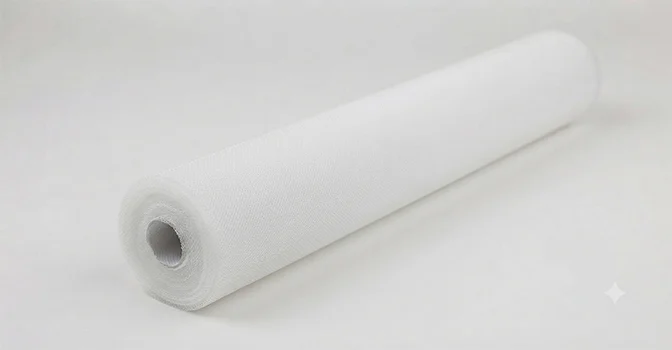
Greenhouse insect netting One of the most important protective equipment in modern greenhouse cultivation systems is a barrier that reduces the possibility of many pests entering by creating a physical barrier. This equipment is known as one of the main components of integrated pest management (IPM) and can, along with biological methods, help reduce pesticide use, increase product quality, and improve production sustainability.
The function of greenhouse netting is not limited to preventing insects from entering. Mesh size, fiber material, weave type, resistance to ultraviolet (UV) radiation, air permeability, light permeability, and mechanical strength all affect its final performance. Incorrect selection of greenhouse netting may, on the one hand, prevent complete pest control, and on the other hand, reduce greenhouse ventilation, increase temperature, and increase relative humidity.
In this article, the structure, technical specifications, performance, benefits, limitations, selection criteria, and installation and maintenance tips for pest control nets have been analytically reviewed so that users can make an informed choice based on climatic conditions, crop type, and target pests.
Introduction of greenhouse insect netting
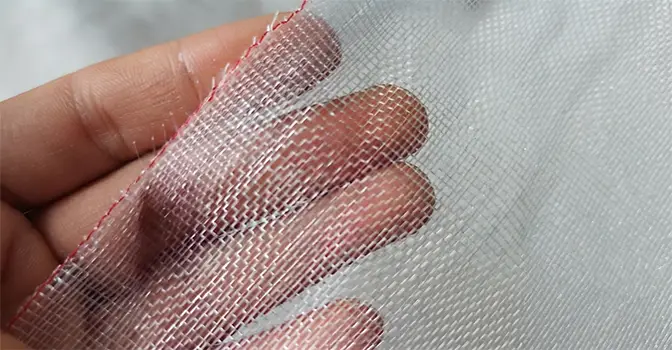
Greenhouse insect screen is a network of polymer fibers with uniform pores that is usually installed over vents, windows, entrances, and ventilation sections of a greenhouse. The main purpose of this screen is to prevent insects and pests from entering the growing environment, without completely blocking the flow of air and light.
Unlike chemical methods that are applied after the pest has emerged, insect netting is considered a preventative method. This feature has led to the installation of netting being recommended as the first line of defense in many greenhouse pest control programs.
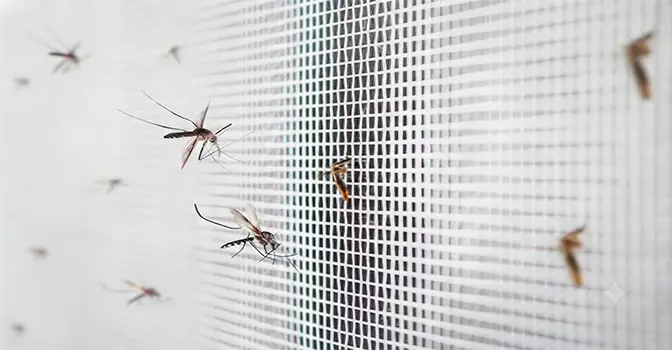
Pests such as greenhouse whiteflies, aphids, thrips, some mites, and other disease-carrying insects commonly enter greenhouses through ventilation openings. Reducing this entry route can significantly reduce pest pressure and allow for the effective use of natural enemies and other IPM methods.
Structure, material and types of greenhouse insect netting
The most common raw material for netting is HDPE or high-density polyethylene. This polymer is widely used in greenhouse equipment due to its good resistance to moisture, temperature changes and environmental conditions. In many products, stabilizing additives are also added to the polymer structure to increase its durability.
In terms of weave structure, laces are usually produced in three main groups:
- Plain or flat weave
- Leno weave
- Raschel weave
Rachel weaves typically have greater mechanical resistance to tension, wind, and impact and are used in many large greenhouses. In contrast, plain weaves are less expensive to produce but may be less durable against mechanical stress.
In terms of color, nets are also produced in white, black, and silver. White nets usually allow more light to pass through, black nets can increase the amount of shading, and silver nets can help reduce heat absorption and repel some insects in some situations.
Technical specifications of insect screen
One of the most important technical specifications is the greenhouse netting mesh. Mesh refers to the number of pores per unit area. The larger the mesh number, the smaller the pore size.
The most common options are:
- Mesh 25
- Mesh net 40
- Mesh net 50
In many applications, 40 mesh netting provides a good balance between ventilation and pest control. This type of netting is suitable for controlling many common pests such as aphids and greenhouse whiteflies.
In contrast, 50 mesh has finer pores and is usually chosen for controlling thrips and other very small insects. However, reducing the pore size will usually also increase resistance to air flow.
The weight of the net is another indicator of quality. Many standard products weigh around 120 to 140 grams per square meter. The right weight usually provides greater strength and resistance to tearing, although the increased weight may also increase the initial cost.
Mechanically, the tensile strength of HDPE netting is typically reported to be in the range of 20 to 37 MPa. This property allows the netting to perform reasonably well against wind, impact from light objects, and typical greenhouse pressures.
The presence of an anti-UV net is also considered one of the most important technical specifications. Continuous exposure to ultraviolet radiation can cause the polymer to become brittle over time. Anti-UV additives slow this process and usually increase the useful life of the net to about 3 to 5 years.
In terms of light, many nets are able to transmit about 80 to 90 percent of sunlight. This amount varies depending on the color, weave density, and mesh size.
How insect netting works
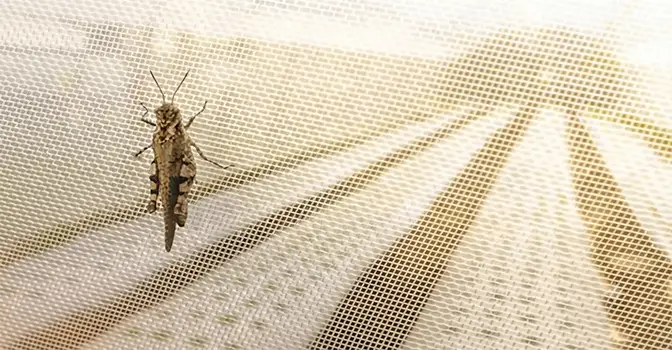
The function of pest control netting is based on creating a physical barrier. The holes in the netting are designed to allow airflow, but are not large enough to allow many insects to pass through.
The smaller the pest, the finer the mesh size required. For example, thrips control typically requires mesh sizes around 200 microns, while larger mesh sizes can be used to prevent whiteflies from entering.
The function of netting is not limited to preventing the entry of pests. Reducing the entry of viral and bacterial disease vectors can also reduce the likelihood of the spread of some plant diseases. On the other hand, limiting the entry of pests increases the effectiveness of natural enemies and other biological control methods.
Of course, smaller pores increase resistance to airflow. Various studies have shown that some very fine meshes may reduce greenhouse ventilation rates by as much as 30% or more. Consequently, the choice of mesh size should always be in accordance with the capacity of the ventilation system and the climatic conditions of the area.
Factors affecting the performance of insect screen nets
The effectiveness of insect screen netting is not solely dependent on mesh size. The type of pest targeted, the design of the greenhouse structure, climatic conditions, wind intensity, dust levels, and installation method also affect its final performance. In areas with intense sunlight, the use of UV-resistant screen netting is more important because polymer degradation due to ultraviolet radiation can reduce strength and increase the likelihood of tearing.
Benefits of insect netting
Using insect screen in greenhouses has several benefits. The most important benefit is that it reduces the entry of pests and thus the need for insecticides. This can reduce the costs of chemical control and improve the quality of the product.
Nets also prevent the entry of birds, some large insects and coarse particles, and provide some protection against wind and hail. In addition, their use as part of an integrated pest management (IPM) framework increases the effectiveness of biological methods and reduces pest pressure throughout the growing season.
How to choose the right insect screen? Mesh selection guide
The appropriate selection of greenhouse netting is usually based on four main criteria:
- Target pest type
- Greenhouse ventilation capacity
- Climatic conditions of the region
- Build quality and UV resistance
· The selection of greenhouse netting should be based on the type of target pest, climatic conditions, and ventilation system capacity. If the main goal is to prevent thrips from entering, netting with pores of about 200 microns or 50 mesh will usually be a more appropriate choice.
In greenhouses with limited natural ventilation or in hot climates, using 40 mesh can provide a better balance between pest control and air flow. This choice reduces air pressure drop compared to very fine mesh.
· If the greenhouse has adequate mechanical ventilation, the limitation caused by the reduced ventilation rate is largely compensated and the use of finer meshes will be possible. Therefore, mesh selection should always be based on a combination of technical factors, not just pore size.
| Mesh type | Pore size | Pest control | Ventilation | Application |
|---|---|---|---|---|
| Mesh 25 | Big | Large insects | Very suitable | Large pests |
| Mesh 40 | Medium | Aphids and whiteflies | Suitable | Most greenhouses |
| Mesh 50 | Very small | Thrips and small insects | More limited | Sensitive greenhouses |
Common mistakes when choosing an insect screen
Choosing greenhouse insect screen based solely on price or mesh size is one of the most common mistakes that can affect the performance of your greenhouse pest control system.
A common mistake is to choose a very fine mesh for all greenhouses. Although meshes with smaller pores, around 200 microns, are more effective at keeping out thrips and other small insects, they also increase air pressure drop and reduce ventilation rates. In greenhouses without proper mechanical ventilation, this can increase indoor temperatures and humidity.
Neglecting the quality of construction is another common mistake. When choosing a net, in addition to the aperture size, attention should be paid to the HDPE polyethylene material, the presence of an anti-UV additive, the diameter of the fibers, the type of weave, and the mechanical strength. Nets that do not have sufficient resistance to sunlight usually become brittle and tear more quickly.
Also, selecting netting without considering the greenhouse’s biological control program can reduce the effectiveness of this method. In many integrated pest management (IPM) systems, netting, in addition to preventing the entry of pests, helps maintain populations of natural enemies, parasitoids, and even some pollinators in the greenhouse environment. Therefore, the choice of netting should be consistent with the overall pest management strategy.
When should the insect screen be replaced?
Replacement of the mesh is usually recommended when its protective performance or mechanical strength has decreased. Tearing, pore deformation, reduced tensile strength, or brittleness due to sunlight are the most important reasons for replacement.
In many nets with anti-UV additives, the useful life is reported to be about 3 to 5 years, but this period can change depending on environmental conditions, the intensity of sunlight, maintenance method, and the amount of mechanical stress.
Signs of insect screen wear
One of the first signs of deterioration is the development of small tears or openings in the mesh fabric, which can provide a pathway for pests to enter. Discoloration, drying and brittle fibers, and loss of flexibility are also common signs of polymer degradation due to UV radiation.
Reduced air flow due to permanent clogging of pores, deformation of pores (Aperture), reduced fiber diameter strength, and increased wind damage can also indicate that the net is approaching the end of its useful life.
The difference between insect screen and awning screen
Although both products are used in greenhouses, their design goals are different. Greenhouse insect screen is designed to prevent pests from entering by using precise and uniform apertures, and the aperture size is the most important performance characteristic.
In contrast, awning netting is used to reduce the intensity of sunlight and create shade, and the main criterion for its selection is the percentage of shading, not the ability to prevent insects from entering. For this reason, these two products are usually not substitutes for each other, and each has its own specialized application.
Common mistakes in installing insect screens
One of the most common installation errors is leaving small gaps and gaps around the frames. Even if the mesh has very fine pores, the presence of open paths around it can allow pests to enter.
Excessive tension during installation may also increase tension in the mesh fabric and reduce its useful life. On the other hand, loose installation without proper tension also increases the likelihood of tearing due to wind.
Ignoring the airflow direction and installing the screen without considering the natural ventilation or mechanical ventilation capacity can also increase air pressure drop and reduce ventilation rate. In addition, failure to periodically inspect and clean it will cause dust to accumulate on the vents and gradually reduce the screen’s performance.
Conclusion
Greenhouse insect screens are one of the most effective physical methods for reducing pest entry into a growing environment and play an important role in many integrated pest management (IPM) programs. However, their performance depends on the correct selection of mesh, quality of construction, type of weave, resistance to UV radiation, proper installation, and proper maintenance.
The choice between 40 mesh and 50 mesh should be made based on the type of pests, climatic conditions, and ventilation capacity of the greenhouse. Using a mesh with very fine pores without regard to ventilation capacity may increase temperature and humidity, while choosing a coarser mesh increases the possibility of some small pests entering. Therefore, striking a balance between protection and ventilation is the most important principle in choosing the right mesh.
Practical recommendations
- Before purchasing greenhouse insect netting, identify the dominant pests in the area and the type of crop.
- In areas with strong sunlight, use anti-UV netting or high-quality HDPE polyethylene netting.
- Completely seal all seams and connection points when installing greenhouse netting.
- Have a regular washing and inspection schedule to prevent clogged pores and torn mesh.
- Make the choice between 40 mesh and 50 mesh based on the actual ventilation needs and type of pests.
- Use netting as part of integrated pest management (IPM) and combine it with continuous monitoring, biological control, and proper greenhouse management.
Frequently Asked Questions About Greenhouse Insect Netting
1- What is the use of insect repellent net?
By creating a physical barrier, this net reduces the possibility of many pests such as whiteflies, aphids, and thrips entering, and is considered an important tool in integrated pest management (IPM).
2- What is the difference between 40 mesh netting and 50 mesh netting?
40 mesh usually provides a good balance between air passage and pest control, while 50 mesh has finer pores and is better suited for controlling thrips and other small insects, but may further reduce ventilation rates.
3- Is insect repellent netting an alternative to spraying?
No. Netting is part of a biological control and integrated pest management program and is usually used alongside other management methods.
To view equipment related to greenhouse maintenance, see the section Greenhouse equipment Check it out.


