





Glass greenhouse structure; a comprehensive guide to the design, construction, implementation and inspection of a Dutch glass greenhouse (Venlo)
Glass greenhouses are one of the most advanced structures used in modern agriculture, which, by creating a controlled environment, allows for the production of high-quality products in all seasons of the year. Due to their very high light transmission, good strength, and long lifespan, glass greenhouse structures have become one of the best options for the industrial production of vegetables, garden crops, ornamental flowers, and hydroponic products. For this reason, many investors and professional producers choose this type of greenhouse to develop their businesses.
Designing and building a Dutch glass greenhouse requires adherence to engineering principles, selection of standard materials, and careful execution of all installation steps. The choice of structure type, glass, equipment, and control systems has a direct impact on the final performance of the greenhouse. If you are planning to implement a professional project, receiving expert advice from experienced groups can make the design and implementation of the project significantly simpler and more economical.
History of glass greenhouse structure
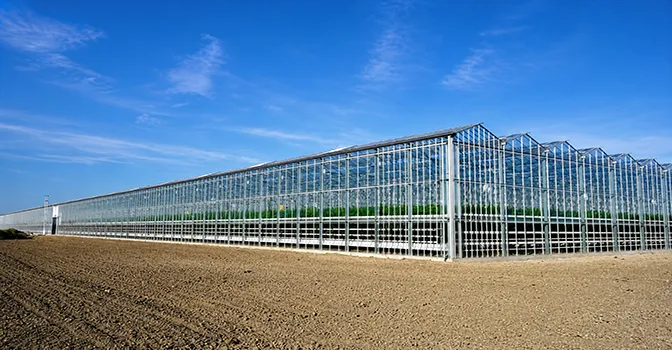
The glass greenhouse structure has a long history in the global agricultural industry. The first examples of this structure were built in European countries such as Spain and Italy. The main purpose of building these greenhouses was to produce off-season products and increase agricultural productivity.
In the 19th century, England, the Netherlands, and the United States accelerated the development of this technology. After World War II, extensive research by universities and manufacturing companies led to the formation of a new generation of Dutch glass greenhouses. These structures, utilizing engineering design, robust structures, and advanced equipment, significantly increased production efficiency.
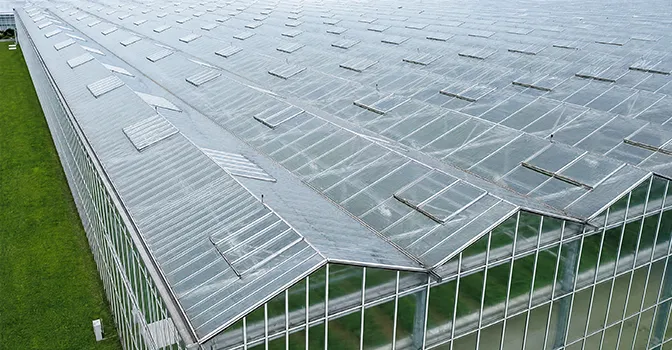
One of the most famous models of this structure is the Venlo greenhouse, which was first developed in the city of Venlo, Netherlands. This design quickly spread around the world due to its very high light transmission, good resistance to wind and snow, and the possibility of implementing large openings.
Today, glass greenhouse design in Iran is also modeled after Dutch technology. The use of galvanized structures, tempered glass, and smart equipment has made these greenhouses a suitable option for the country’s diverse climatic conditions. In addition, the development of hydroponic cultivation and the production of export products has increased the importance of using industrial glass greenhouses more than ever before.
Steps to install a glass greenhouse structure
Installing a glass greenhouse is not limited to just installing the frame and glass. This project is a set of engineering, construction, and installation operations that must be carried out carefully and in accordance with technical standards. Following the sequence of steps ensures the final quality of the structure and the performance of the equipment.
Initial design
In the first stage, the climatic conditions of the region, the type of crop, the amount of sunlight, the direction of the wind, and the dimensions of the land are examined. Then, structural drawings, mechanical systems, and facilities are prepared so that all components are coordinated.
Foundation preparation
After determining the construction site, excavation and foundation construction begins. The foundation must transfer the weight of the structure, glass, and equipment evenly to the ground. Drainage paths and underground facilities are also implemented at this stage.
Skeleton installation
The main frame, consisting of columns, trusses, beams and braces, is installed. In the Venlo greenhouse, this section is of great importance, because all the loads applied to the structure are transferred to the foundation through these components.
Installing glass cladding
At this stage, glass panels are installed on aluminum profiles. The use of EPDM strips and standard sealants will increase sealing, reduce energy loss, and increase the durability of the structure.
Implementation of the ventilation system
Skylights, side windows, exhaust fans, and temperature control equipment are installed. These equipment are responsible for maintaining the internal temperature within the appropriate range and preventing humidity from increasing.
Implementing an irrigation system
Most projects use drip irrigation, fogging, and fertilizer injection systems. In advanced greenhouses, smart sensors automatically control the amount of irrigation and fertilization.
Features of glass greenhouse structure
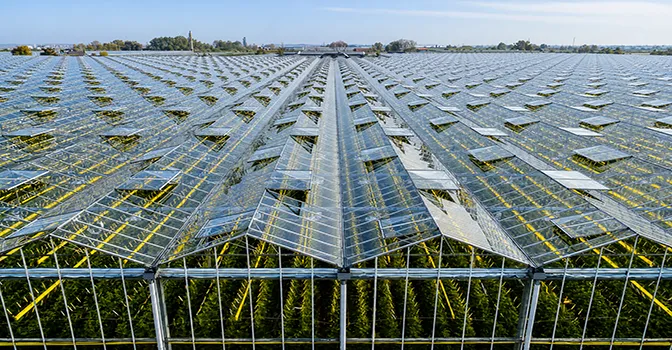
The glass greenhouse structure offers numerous capabilities to its users due to its engineering design and use of durable materials. The most important features of this structure are:
- High light transmission: Maximum natural light transmission to increase plant photosynthesis.
- High strength: Good resistance to wind, snow and structural loads.
- Proper insulation: Reduce energy loss by using standard sealing.
- Long lifespan: Capable of operating for more than four decades with proper maintenance.
- Equipment installation capability: Ability to implement heating, cooling, irrigation, and smart control systems.
- Appearance: Creating a modern and professional structure for agricultural projects.
- Expandability: Possibility of increasing the greenhouse area in the future without major changes to the structure.
- Compatibility with hydroponic cultivation: Suitable for advanced soilless production systems.
Technical specifications of glass greenhouse structure
Technical specifications are the main criteria for evaluating the quality and performance of a glass greenhouse structure. Choosing the right specifications increases the efficiency and durability of the structure.
- Structural dimensions: The opening width is usually designed between 6 and 12 meters and the height under the gutter varies between 4 and 6 meters. The final dimensions are determined based on the type of product and project conditions.
- Glass thickness: 4 to 6 mm glass is usually used. Choosing the right thickness depends on climatic conditions, wind speed, and snow load.
- Material Type: The skeleton is made of hot-dip galvanized steel or aluminum to provide high resistance to corrosion and moisture.
- Structural strength: The structure is designed in such a way that it can withstand wind and snow loads in accordance with engineering standards and ensure the safety of the project.
- Implementation standards: All connections, screws, seals, and profiles must be implemented in accordance with international standards to increase the useful life of the structure.
- Engineering considerations: Structural calculations, foundation design, column spacing, truss dimensions, and equipment selection should be based on the load capacity and climatic conditions of the location.
Advantages of glass greenhouse structures
Using a glass greenhouse provides numerous benefits for agricultural producers.
- Reducing long-term costs
- Increase productivity
- Reducing the frequency of cover changes
- Increasing product quality
- Suitability for industrial production
- Better climate control
Comparison of glass greenhouse structures with other greenhouses
| Features | Glass greenhouse | Plastic greenhouse |
|---|---|---|
| Initial cost | A lot | Less |
| Lifespan | 40 to 50 years | 5 to 10 years |
| Light transmission | About 97% | Less |
| Resistance | Very high | Medium |
| Repairs | Low | More |
| Maintenance | Easier in the long run | Requires periodic replacement of the coating. |
| Structure weight | More | Less |
| Productivity | Very high | Medium |
Applications of glass greenhouse structures
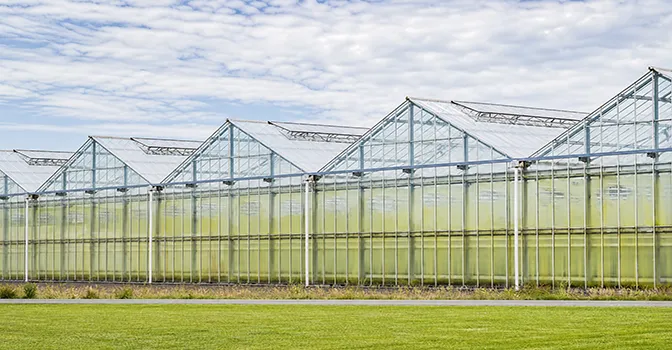
The glass greenhouse structure is used in many branches of modern agriculture due to its high light transmission, precise control of environmental conditions, and the possibility of installing intelligent equipment. This structure is considered an ideal option for producing products with high economic value, off-season cultivation, and increasing product quality. Also, the ability to implement automatic systems has made the industrial glass greenhouse the most widely used in large commercial projects.
Glass greenhouse for growing vegetables
One of the most important uses of glass greenhouses is the production of vegetables such as lettuce, spinach, basil, parsley and other leafy greens. Maximum light transmission increases the rate of photosynthesis, uniform growth and improves product quality. In addition, precise control of temperature and humidity allows for continuous production throughout the year.
Glass greenhouse for summer vegetables
Tomatoes, cucumbers, bell peppers, eggplants and strawberries are among the most important crops grown in the Venlo greenhouse. The appropriate height of the structure, good ventilation and abundant light create ideal conditions for the growth of these crops, resulting in increased production yields per square meter.
Glass greenhouse for ornamental plants
Cut flowers, roses, gerberas, lilies, chrysanthemums, and many ornamental plants grow to very high quality in this type of greenhouse. The ability to precisely adjust temperature, humidity, light intensity, and carbon dioxide injection increases flower quality, shelf life, and export value of the product.
Glass greenhouse for houseplants
Plants such as orchids, anthuriums, philodendrons, pothos, spathiphyllums and other houseplants require a stable environment. The glass greenhouse structure allows for such conditions, allowing growers to produce uniform and healthy crops.
Glass greenhouse for hydroponic cultivation
One of the most important uses of a Dutch glass greenhouse is the implementation of hydroponic systems. In this method, plants grow without soil and in a nutrient solution. Precise control of nutrients, reduced water consumption, increased yield, and reduced soil-borne diseases are among the most important advantages of this system.
Types of glass greenhouses based on structure and application
Glass greenhouses are classified based on their design, operation, and structural design. Choosing the right model depends on the type of product, budget, climate, and investment goals.
Fixed glass greenhouse
This model is the most common type of glass greenhouse structure and is designed for large and permanent projects. The metal frame is installed on a concrete foundation and cannot be moved. The use of advanced equipment, intelligent systems, heating, cooling, ventilation, shading curtains and automatic irrigation systems is very common in this type of greenhouse. Long lifespan, low maintenance costs and the possibility of project development are considered to be its most important advantages. If the goal is commercial and export production, this type of structure will be the best choice.
Movable glass greenhouse
A mobile greenhouse is used for smaller projects or temporary cultivation. This structure is smaller than the fixed model and can be moved to a new location if needed. Its implementation cost is lower, but the capacity to install advanced equipment will be more limited. This type of structure is a good option for research centers, seedling production, or experimental projects.
All-glass greenhouse
In this type, the walls and roof are made almost entirely of glass. The light transmission in this structure reaches the maximum possible amount and for this reason it is widely used for light-loving plants, cut flowers and export products. However, its construction and maintenance costs are higher than other models.
Semi-glass greenhouse
In a semi-glazed greenhouse, part of the walls are constructed with materials such as concrete, block, or sandwich panels, and the roof or upper part of the walls is covered with glass. This design reduces construction costs and improves the thermal performance of the structure in some cold regions.
Industrial glass greenhouse
The industrial glass greenhouse is considered the most advanced model available. This structure is usually designed according to Venlo greenhouse standards and is equipped with climate control systems, smart irrigation, heating, cooling, CO₂ injection, energy curtains, automatic shading, LED lighting and greenhouse management software. This type of greenhouse provides the highest productivity and profitability for professional growers.
Types of materials used in glass greenhouses
Choosing the right cover is one of the most important factors in designing a glass greenhouse. In addition to light transmission, the type of glass has a direct impact on the strength of the structure, energy consumption, and maintenance costs.
Plain glass
Plain glass is the most economical option for greenhouse covering. It allows good light transmission but has little resistance to impact and thermal shock. For this reason, it is mostly used today in small projects or areas with mild climate conditions.
Greenhouse tempered glass
Greenhouse tempered glass is the most common option in modern projects. This glass is produced through heat treatment and its strength is several times that of ordinary glass. If it breaks, it also breaks into small, non-sharp pieces, which provides greater safety. High light transmission, resistance to temperature changes and long lifespan are among its most important advantages.
Flute glass
Float glass has a completely smooth and transparent surface and transmits light well. High appearance quality and uniformity of thickness are important features of this glass. Although its resistance is less than tempered glass, it is used in some projects due to its high transparency.
Laminated glass
Laminated glass consists of several layers of glass and a PVB interlayer. This structure prevents the glass pieces from separating even if broken. This type of glass also absorbs a significant portion of ultraviolet radiation and has high safety. For this reason, it is more widely used in special projects or areas with harsh weather conditions.
Double-glazed window
Double-glazed glass is suitable for greenhouses where energy control is important. The space between the two layers of glass acts as thermal insulation, reducing energy loss. Although its initial cost is higher, it will reduce heating costs in cold regions.
Conclusion
The glass greenhouse structure is one of the most advanced technologies used in modern agriculture. Very high light transmission, good resistance, long life, the possibility of installing smart equipment and the ability to fully control environmental conditions have made this structure a suitable choice for producing high-quality products. Although the initial cost of implementing a Dutch glass greenhouse is higher than other types of greenhouses, high productivity, reduced long-term costs and increased product quality make this investment economically justified.
If you are planning to design a glass greenhouse, build a glass greenhouse, or purchase a glass greenhouse structure, it is recommended that you professionally review the cultivation needs, climatic conditions, budget, and equipment required before starting the project. Choosing a standard structure and implementing it properly will be the most important factor in success and increasing the return on investment in greenhouse projects.
Frequently Asked Questions About Glass Greenhouse Structures
1- How is the Venlo greenhouse different from other glass greenhouses?
The Venlo greenhouse is an engineering standard developed in the Netherlands, known for its modular roofs, very high light transmission, high strength and the ability to install advanced equipment. This structure provides better ventilation, the possibility of implementing larger openings and easier equipment management than many traditional models. For this reason, it is considered the most popular type of Dutch glass greenhouse in industrial and export projects.
2- What is the useful life of a glass greenhouse structure?
If standard materials are used, properly implemented, and periodic servicing is performed, the useful life of a glass greenhouse structure will usually be between 40 and 50 years. Of course, the quality of the glass, the type of anti-corrosion coating on the frame, climatic conditions, and maintenance have a direct impact on the durability of the structure. Periodic inspection of the connections, cleaning of the glass, and servicing of the equipment will increase the lifespan of the greenhouse.
3- Is a glass greenhouse suitable for hydroponic cultivation?
Yes. One of the most important uses of industrial glass greenhouses is the implementation of hydroponic systems. High light transmission, precise control of temperature, humidity, ventilation and plant nutrition create ideal conditions for this cultivation method. For this reason, many professional producers of vegetables, greens and medicinal plants use glass greenhouses for hydroponic production.
To review the implementation options, page Greenhouse Structures See. You can also Greenhouse equipment and Plastic Greenhouse Guide Check out to compare and choose the one that suits your project.


