


Sorting and packing greenhouse eggplants, tomatoes and peppers: packhouse, machinery and retail packaging
Greenhouse produce reaches the market in good condition only when harvesting, handling, grading and packing are managed together. A sound tomato can be crushed during packing; a pepper can be damaged by pressure or a neighbouring stem; and greenhouse eggplants can lose their marketable appearance through skin abrasion or unsuitable storage.
Production planning therefore extends from seed selection and greenhouse construction to preparing the crop for sale. The packhouse connects production to the market, turning harvested produce into uniform, traceable lots that meet the buyer’s order.
This guide concerns fresh-market eggplants, tomatoes and sweet peppers. A seed sorter, dried-chilli sorter or industrial processing-tomato line is not necessarily suitable for them.
1. How do sorting and packing differ?
| Stage | Purpose | Example |
|---|---|---|
| Initial selection | Remove unsuitable produce and foreign material | Reject rotten or damaged fruit |
| Sorting | Separate by measurable characteristics | Weight, size or colour groups |
| Quality grading | Assess quality against sales specifications | Health and appearance classes |
| Portion formation | Set the count or weight | Select the quantity for a pack |
| Packing | Protect and prepare for sale | Container, film, carton and label |
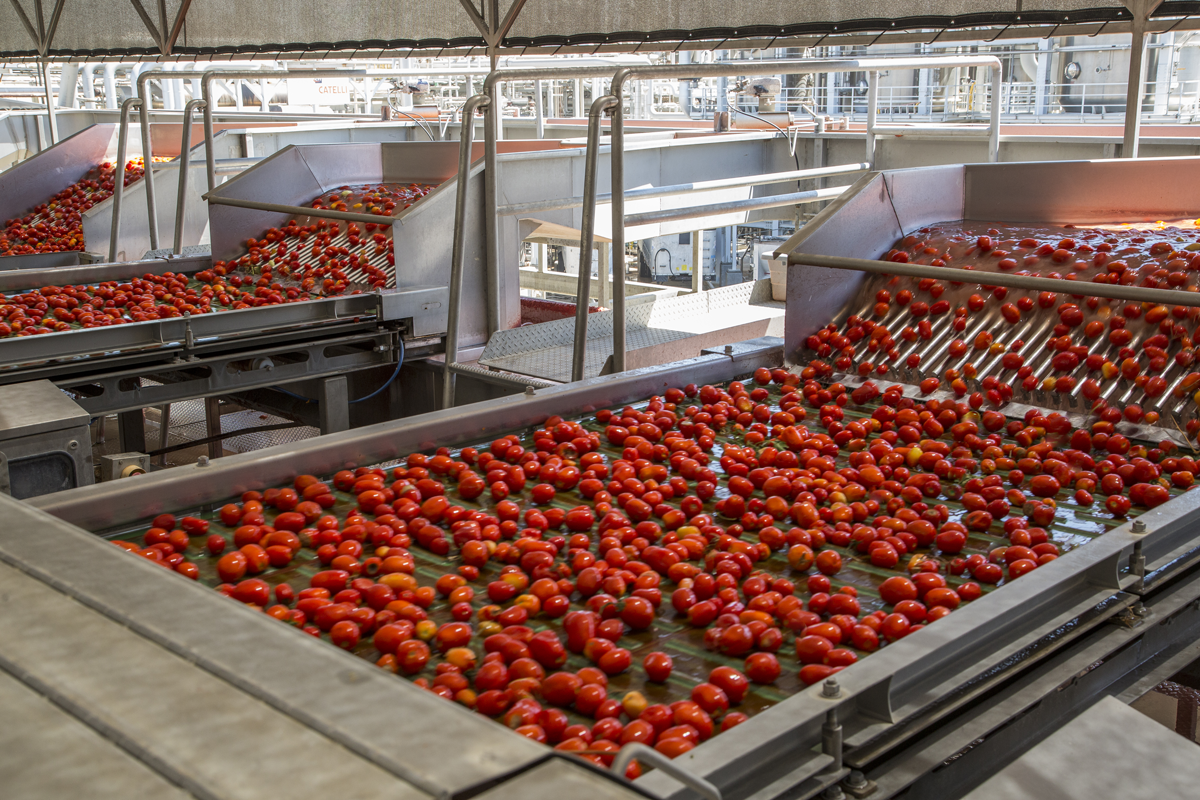
A weighing machine does not necessarily detect decay. A defect-detection camera does not produce a finished retail pack by itself. These functions must work together. FAO guidance similarly distinguishes removal of unsuitable produce, sorting, grading and packing. FAO
2. Designing the greenhouse packhouse
A packhouse can serve one greenhouse or several growers. Its layout should provide a clear, low-interruption flow:
Reception → initial inspection → preparation → grading → packing → final inspection → suitable holding → dispatch
Incoming produce, waste, finished packs and handling equipment should not cross unnecessarily. Reducing intersecting routes improves organisation and helps reduce contamination and collisions. FAO packhouse design
| Area | Main facilities |
|---|---|
| Reception | Shaded unloading, scales and lot registration |
| Quality control | Sampling bench, lighting and measuring tools |
| Line feeding | Crate tipper, conveyor and flow regulation |
| Sorting | Equipment appropriate to shape and sensitivity |
| Packing | Weigher, filler, closing equipment and labeller |
| Holding | Conditions appropriate to temperature and waiting time |
| Dispatch | Order checks, pallets and outgoing loads |
| Support | Packaging storage, cleaning, maintenance and utilities |
Floor space is more than the machine footprint. Allow for staff routes, maintenance access, cartons and containers, and future expansion. On manual lines, lighting and bench height affect accuracy and fatigue. FAO greenhouse guidance
3. Why one machine does not automatically suit every crop
| Product | Important line-selection characteristics |
|---|---|
| Greenhouse eggplant | Length, diameter, curvature, delicate skin and stem |
| Round tomato | Size, weight, ripeness and pressure tolerance |
| Cherry tomato | Small dimensions and sensitivity during filling |
| Truss tomato | Preserving fruit attachment and truss shape |
| Sweet pepper | Irregular shape, stem, colour and size |
| Snack or elongated pepper | Different dimensions from block-shaped peppers |
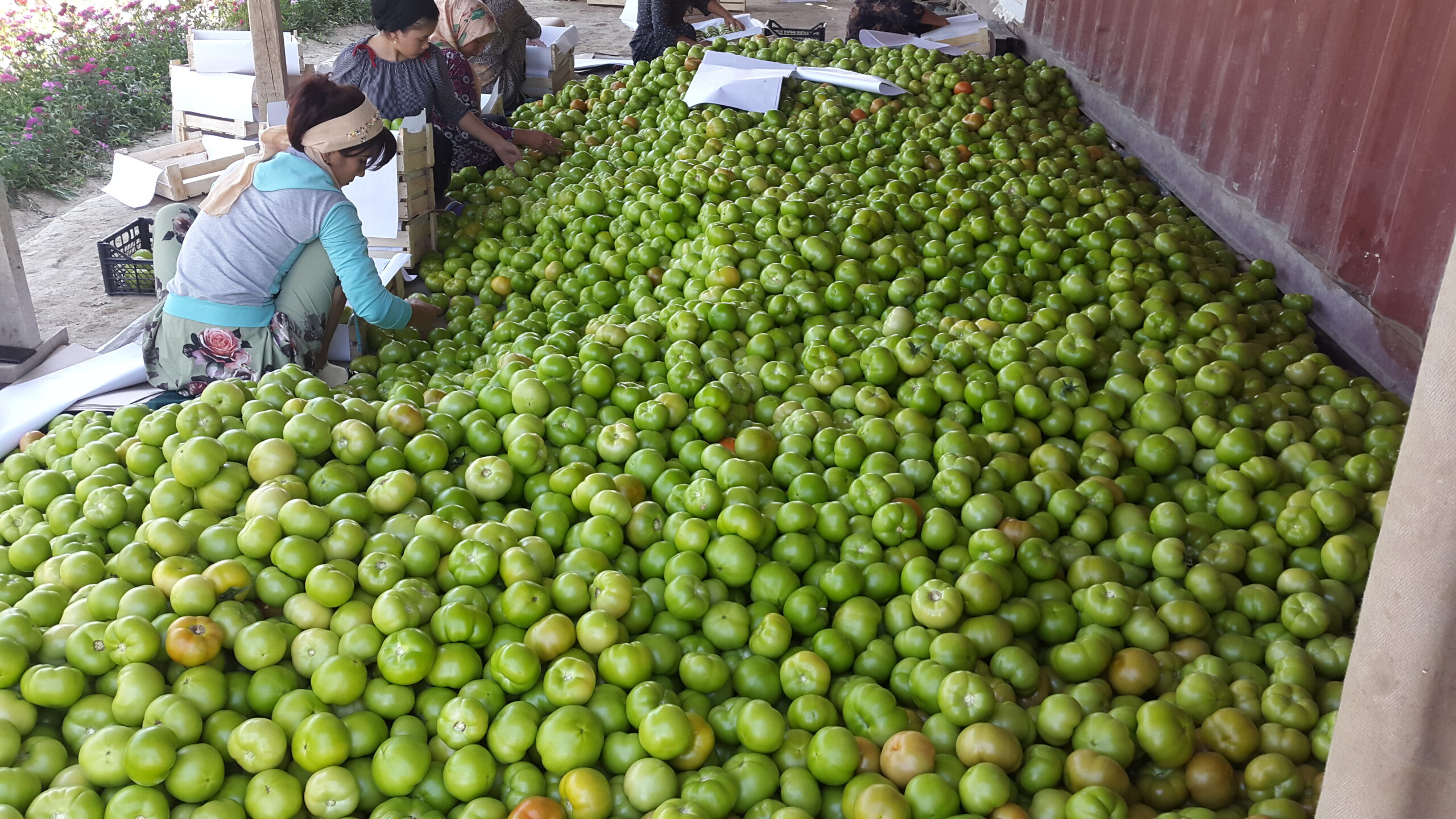
“Multi-product” does not mean one fixed setting. Carriers, clearances, camera programmes or discharge routes may need changes. Truss tomatoes should not be detached merely to fit a loose-fruit sorter: this changes their commercial form. Robotic-handling research treats tomato-truss handling as a separate problem. Research
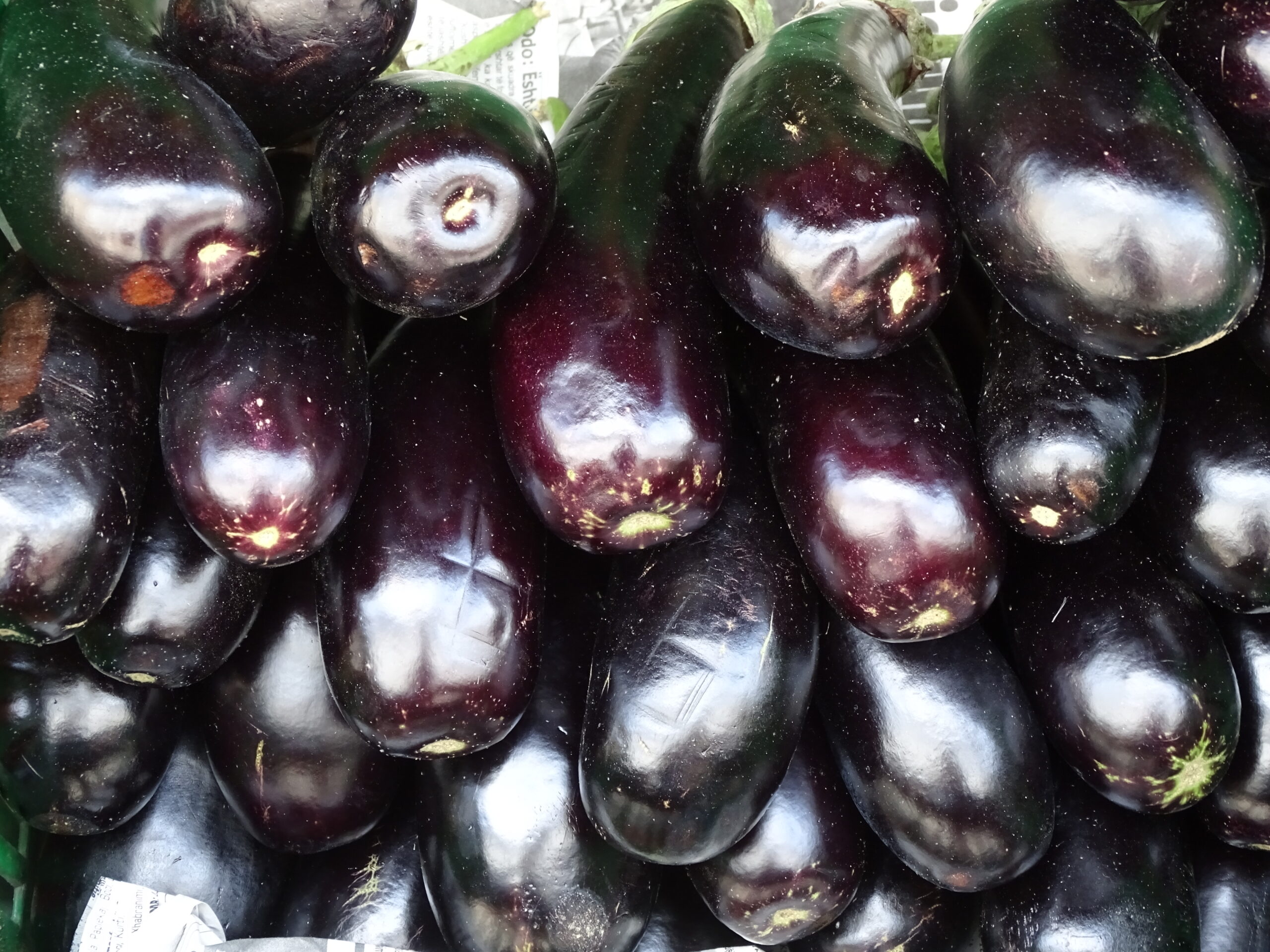
4. Greenhouse eggplant sorting starts with seed selection
First define the buyer’s required form: elongated or oval, small or large, the desired colour and appearance, and packaging format. Then align greenhouse eggplant seed, harvest timing and sorter settings with that target. See the greenhouse eggplant seed offered by Rah Nik Kesht.
Eggplant grading criteria
| Criterion | What to examine |
|---|---|
| Length and diameter | Compatibility with the order and pack dimensions |
| Weight | Formation of weight groups |
| Curvature | Commercial type and buyer specifications |
| Colour | Uniformity appropriate to the variety |
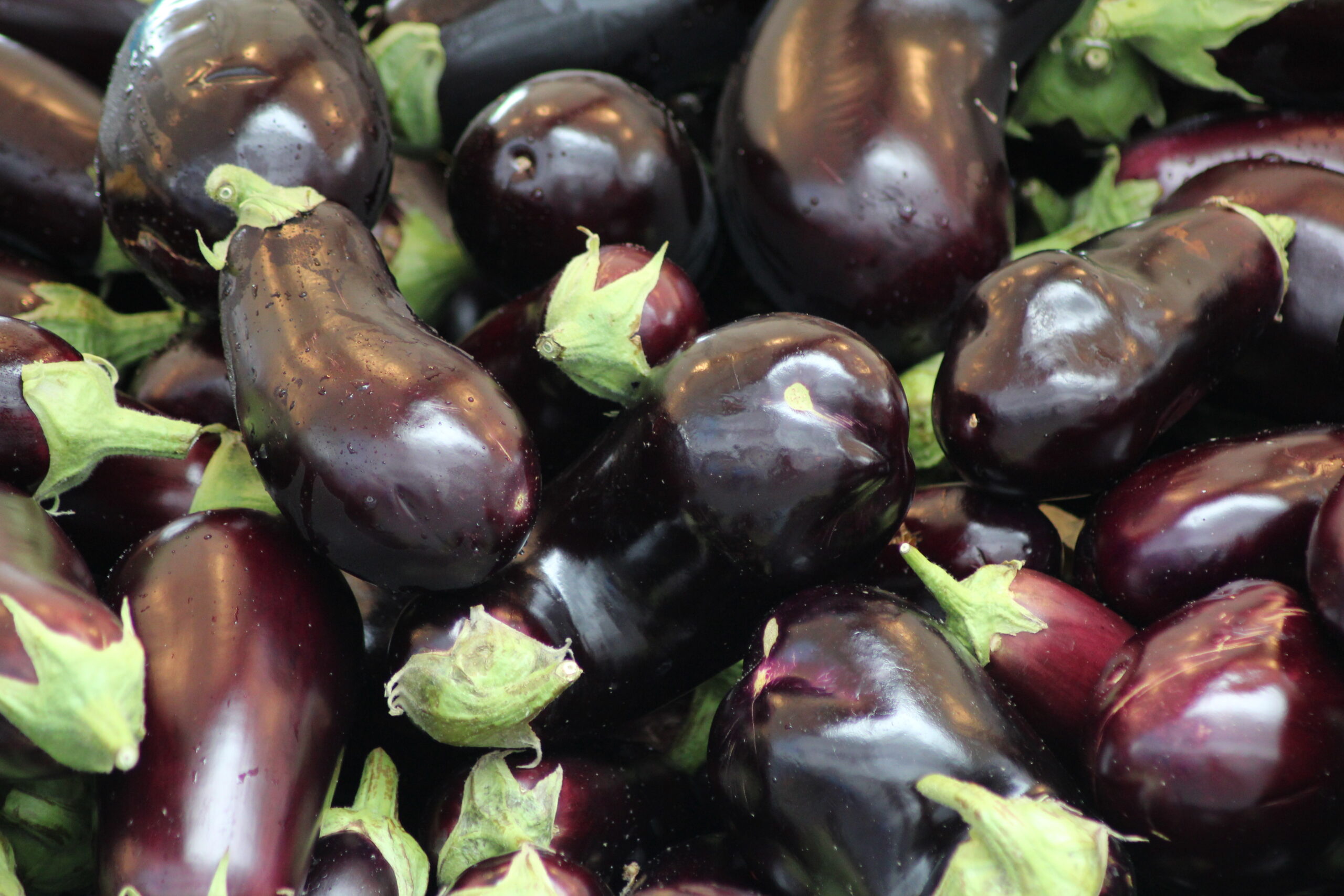
| Skin | Absence of significant abrasions, cuts and damage |
| Freshness | Suitable firmness and absence of shrivelling |
| Stem and calyx | Condition and risk of damaging adjacent fruit |
The specific UNECE eggplant standard is FFV-05. Criteria must reflect the commercial type: dark purple cannot be a universal requirement for white or striped varieties. UNECE
Bigger is not necessarily better. Late harvesting can reduce texture quality and marketability. UC Davis
Suggested eggplant flow
- Record variety, harvest date and lot identifier.
- Remove unsound fruit.
- Feed gently and prevent accumulation.
- Orient fruit for length and curvature measurement.
- Grade to the order.
- Transfer to outlets without impact.
- Pack and perform final inspection.
This is a proposed design sequence. Choose washing according to product condition and the hygiene process, not simply because another line includes it.
5. How tomatoes are graded
Consider size, colour, ripeness, firmness and skin condition together. Cracks, bruising, decay and insect damage can reduce commercial value. UNECE FFV-36 defines Extra, Class I and Class II for fresh tomatoes. These are quality classes, not synonyms for large, medium and small. Sizing can use diameter, weight or count, with different provisions for some groups. UNECE tomato standard
Loose tomatoes are singulated after initial inspection, pass through measurement and go to appropriate outlets. Cherry tomatoes require attention to small dimensions and portion formation. For truss tomatoes, stem condition and fruit attachment are also part of sale quality.
6. How sweet peppers are sorted
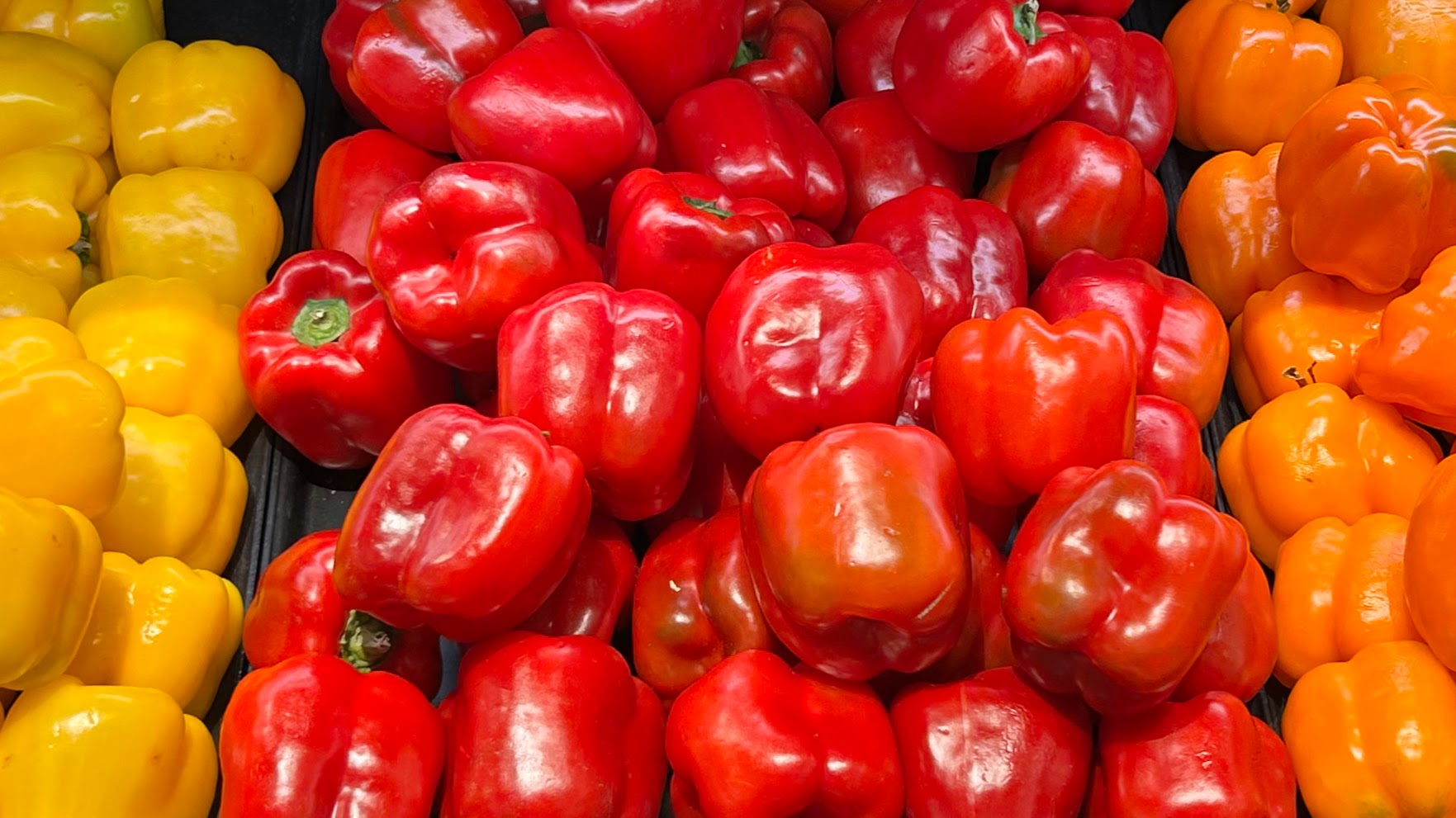
Conveying design must account for irregular shapes and stems. One stem can puncture a neighbouring pepper. Main criteria include colour, size, weight, shape, firmness, stem condition and freedom from cracks, sunscald and decay. Shrivelling may indicate water loss. UC Davis
The specific sweet-pepper standard is UNECE FFV-28. Terms such as “super” should become measurable contract specifications. UNECE
Colour sorting alone does not create a three-colour pack. Each colour must be available separately, followed by a portion-forming stage that assembles the requested combination.
7. Sorting-machine types and operating principles
Manual sorting
Workers inspect and separate produce on tables or conveyors. This can suit small volumes, varied orders or supplementary checks. Accuracy depends on training, reference samples, lighting and working speed. FAO
Mechanical sizing
Defined gaps separate produce into size groups. This does not detect internal quality. With eggplants and peppers, inspect stem snagging and contact between machine parts and skin.
Weight sorting
Each fruit is weighed and directed to a defined outlet. Equal weight does not mean equal shape or quality, so weight alone is not a complete quality criterion. FAO
Optical sorting
Cameras image produce under controlled lighting. Software evaluates attributes such as colour, size, shape or visible defects. Product presentation, surface coverage and acceptance settings matter. “Artificial intelligence” alone does not guarantee detection of every defect. MAF RODA
Internal-quality assessment
Some systems use spectroscopy to estimate internal characteristics. This differs from an ordinary camera and must be validated for the product and variety. For example, MAF RODA presents INSIGHT for characteristics including tomato Brix and ripeness. MAF RODA tomato solutions
8. European manufacturers: documented examples
| Manufacturer | Model or technology | Application |
|---|---|---|
| GREEFA, Netherlands | QSort | Eggplants and other elongated vegetables |
| GREEFA, Netherlands | CombiSort | Tomatoes and peppers with suitable configuration |
| Aweta, Netherlands | Rollerstar and Midstar | Tomatoes |
| Aweta, Netherlands | Millistar | Small produce such as cherry tomatoes |
| Aweta, Netherlands | Cupsizer and TwinVision | Pepper handling and assessment |
| UNITEC, Italy | Cherry Tomato Vision 3 and UNIQ Cherry Tomato | Cherry tomatoes |
| MAF RODA | POMONE IV, GLOBALSCAN 7 and INSIGHT | Tomato calibration and assessment |
| Newtec, Denmark | Gentle-product weighing | Weight portions and packing-line feeding |
| ULMA, Spain | Flow wrapping and tray sealing | Produce packing |
QSort for eggplants
GREEFA’s eggplant page describes QSort separation by length, diameter, colour and curvature, important attributes for elongated produce. Nevertheless, test samples of the actual variety; a model name is not enough. GREEFA eggplants
CombiSort also lists tomatoes and peppers among its applications. Its modular design supports project-specific configurations. CombiSort
Aweta tomato equipment
Aweta presents Rollerstar and Midstar for tomatoes and Millistar for small produce. Millistar uses air valves to direct produce to outlets. Aweta
UNITEC cherry tomatoes
UNITEC presents Cherry Tomato Vision 3 and UNIQ Cherry Tomato for external and internal quality evaluation. Performance must be checked with real produce and the buyer’s acceptance criteria. UNITEC
9. Chinese manufacturers: distinguish actual applications from advertising
FstSort eggplant line
FstSort describes an eggplant line with a washing tank, roller elevator, brushing, air drying and grading. Its page also describes optical weight and size sorting. The stated 6 tonnes/hour is the manufacturer’s claim for that configuration. Test the effect of water, brushes and transfers on eggplant skin. FstSort
REEMOON tomatoes
The company presents FRUSCAN H10 for external inspection and INFRUSCAN EVO7 for certain internal tomato characteristics. Capabilities such as Brix estimation need validation with the actual crop. REEMOON
Techik: fresh versus dried peppers
Techik presents fruit-and-vegetable inspection and sorting, including fresh tomatoes. Its dedicated pepper page, however, mainly concerns dried peppers and pieces. It should not be treated as evidence of a fresh sweet-pepper line without additional documentation. Fruit and vegetables, peppers
Country of manufacture is not the only buying criterion. Product trials, service, spare parts, cleanability, actual throughput and output quality matter more.
10. Greenhouse eggplant packaging formats
| Format | Use | Key point |
|---|---|---|
| Bulk carton or crate | Distribution and wholesale | Limit pressure and movement |
| Individual sale | Sales by count | Appearance and traceability |
| Tray with stretch film | Consumer pack | Tray dimensions and film pressure |
| Flow wrap | Single or multiple fruit | Fruit length and seal position |
| Fixed-weight pack | Retail orders | Net weight and uniform arrangement |
Stretch-wrapped trays
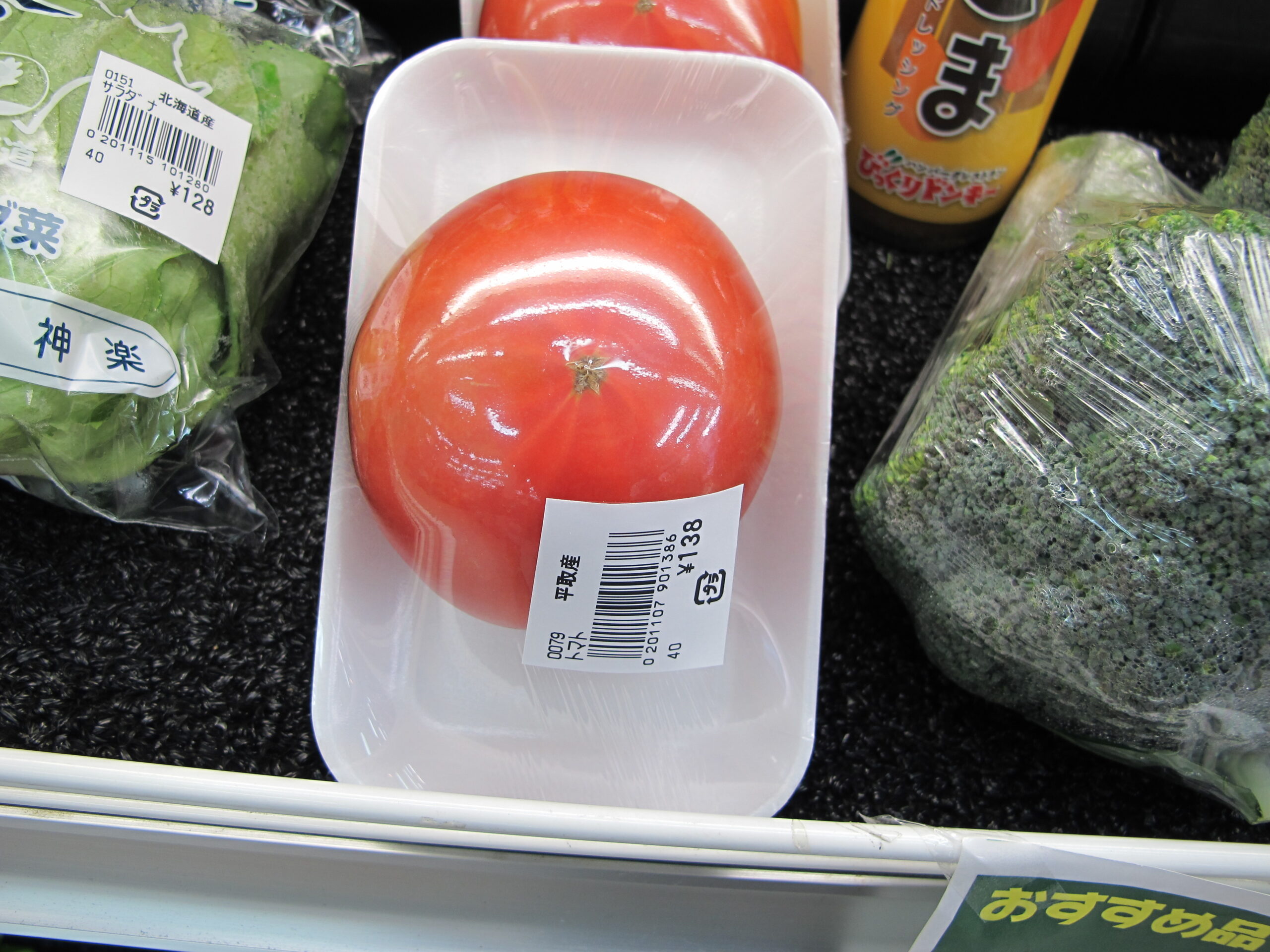
Eggplants sit in a tray with film stretched around it. Avoid pressure on stems and fruit tips. ULMA illustrates this format. ULMA eggplant tray
Eggplant flow wrapping
Film forms around the produce and is sealed. Product spacing and stem position must suit the sealing section. ULMA eggplant flow wrap
11. Tomato packaging formats
Bulk cartons and crates
These serve wholesale, distribution or repacking. Pack depth must suit fruit weight and ripeness. CBI’s European guidance discusses strong cartons and reusable containers and gives 6 kg packs as a common example; the final weight follows the buyer’s order. CBI
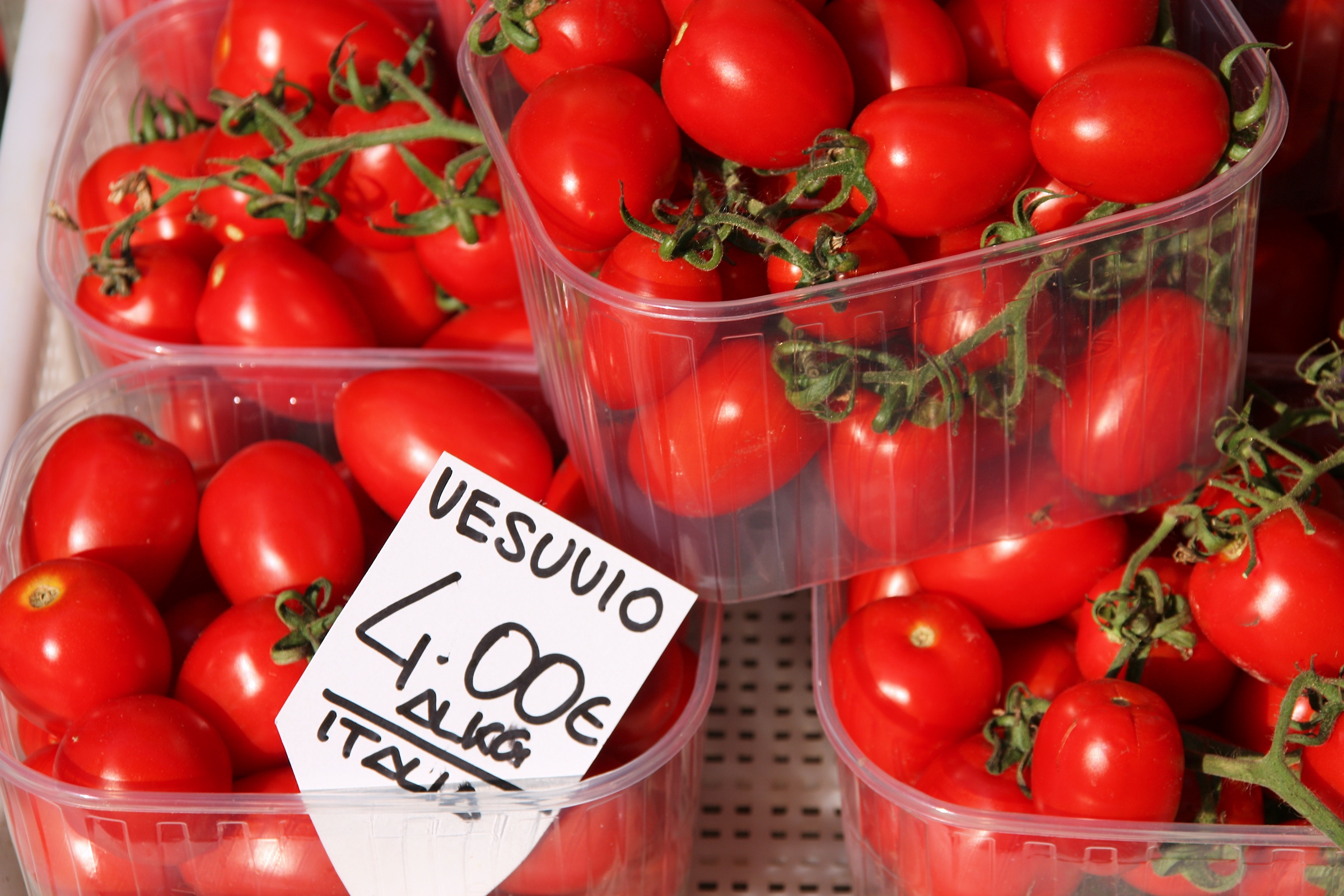
Punnets with lids or film
These suit cherry and plum-type small tomatoes. Container dimensions must match the fruit and filler. Some packs have reclosable lids. ULMA
Cups, bags and cardboard sleeves
These are used for consumer and snack packs. JASA presents several examples. Choose according to visibility, ventilation, shelf life and recycling facilities at the destination. JASA
12. Pepper packaging formats
Peppers may be sold in bulk, multi-count or multi-colour packs, with or without trays. ULMA presents flow wrapping, stretch wrapping and vertical packaging examples. ULMA produce solutions
For three-colour packs, control count or weight and compatible fruit sizes as well as appearance. Over-compressed packs can suffer transport damage.
13. How packaging machines work
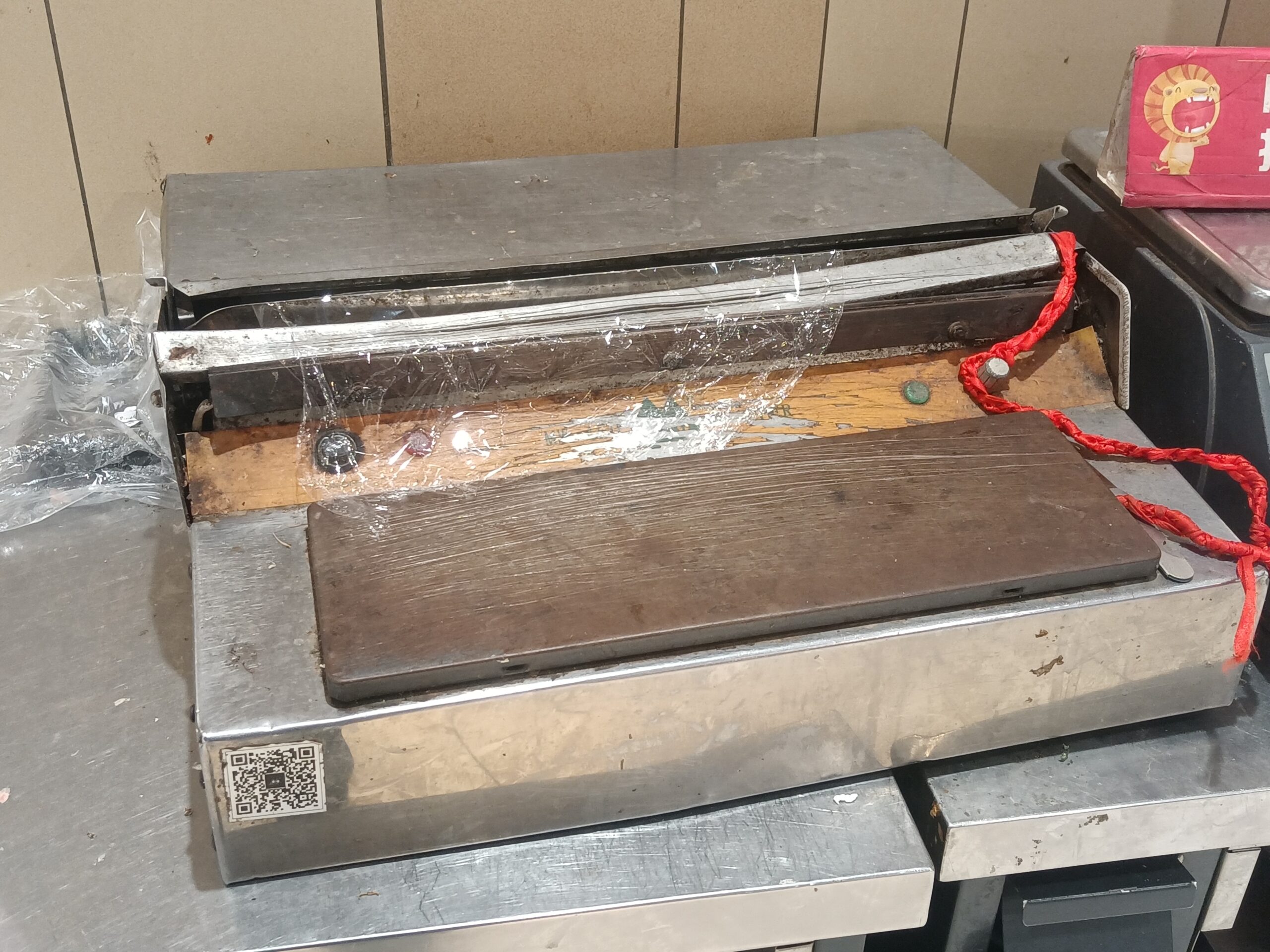
Horizontal form-fill-seal: HFFS
Produce travels on a conveyor while film forms around it. A longitudinal seal and end seals create the pack. ULMA’s ATLANTA is an example of a three-seal flow wrapper. ATLANTA
Vertical form-fill-seal: VFFS
Film forms a bag and a weighed portion enters it. Drop height and the entry route must suit delicate produce.
Tray sealing
Film seals to the container rim. This differs from stretching film around a tray. Modified-atmosphere capability on some machines does not mean every gas mixture suits every product.
Combination weighing
The machine weighs portions and selects a combination close to the target. Gentle discharge design is especially important. In one specific project, Newtec reports four-tomato packs targeting 350 g and a stated rate of 40–50 trays/minute. That figure belongs to that project. Newtec project
14. Market packaging: real examples, not assumptions about national tastes
| Country | Documented retail example | Line-design implication |
|---|---|---|
| Netherlands | Individual eggplants at Albert Heijn | Not every product needs a multi-pack |
| Netherlands | Three peppers and 250 g cherry tomatoes | Count-based and weight-based packs |
| United Kingdom | Three mixed peppers at Tesco | Multi-count pack formation |
| Germany | 500 g mixed peppers at REWE | Net-weight control |
| France | 250 g cherry tomatoes at Carrefour | Small containers |
Sources: Albert Heijn eggplant, Albert Heijn produce, Tesco, REWE, Carrefour.
These are examples of offers, not proof of the preferences of an entire country. Obtain export-pack specifications from the buyer before purchasing machinery.
15. Washing is not always necessary
The need depends on the product, contamination and intended process. FAO distinguishes dry and wet lines for different applications. FAO
For a wet line, manage water quality, equipment hygiene and surface drying. Equipment must be cleanable and cross-contamination controlled. FDA guidance
For eggplants, specifically test skin contact with brushes and conveying components.
16. Storage temperatures are not identical
| Product and stage | Reference temperature |
|---|---|
| Eggplant | 10–12°C |
| Mature-green tomato | 12.5–15°C |
| Light-red tomato | 10–12.5°C |
| Firm-ripe tomato, for 3–5 days | 7–10°C |
| Sweet pepper | About 7.5°C |
UC Davis gives 90–95% relative humidity for eggplants and tomatoes, and above 95% for peppers. These are starting guidelines; consider variety, transport duration and condensation risk.
Eggplants are sensitive to chilling and ethylene. Do not assume they can be stored alongside ripening tomatoes. Eggplant storage life is generally under two weeks. Sources: eggplant, tomato, pepper.
17. Selecting line capacity
Design around peak harvest days. Hypothetical example: 20 tonnes/day over 8 working hours requires 2.5 tonnes/hour. At an assumed 80% utilisation allowing for stops and pack changes, nominal capacity is approximately 3.125 tonnes/hour.
Check the packing stage next: 40 packs/minute at 500 g each equals 1.2 tonnes/hour mathematically. Packing can therefore be the bottleneck. Do not compare fruit/second, tonnes/hour, packs/minute and pallets/hour without conversion and product context.
Eggplant weight and length variation also affect practical throughput. Test claimed capacity using the actual product and pack.
18. Tests before purchasing
- Run samples with different sizes, shapes and ripeness.
- Measure false acceptance and false rejection rates.
- Check skin damage, bruising and stem snagging.
- Reassess produce after storage.
- Record product and pack changeover times.
- Measure the whole line’s capacity, not just the sorter.
- Confirm spare-parts and service availability.
Include labour, consumables, energy, cleaning, parts and downtime in the economic comparison. A useful indicator is preparation cost per kilogram of saleable produce.
19. From eggplant seed to greenhouse construction and sales
A sorter cannot correct every production problem. If fruit form does not match the market order, even excellent machinery can only separate it. Before choosing eggplant seed, review variety specifications, fruit shape and colour, growing conditions and market requirements. Yield and resistance information must come from that specific variety’s documentation.
See Rah Nik Kesht greenhouse eggplant seed. During plastic greenhouse design and construction, plan the packhouse, harvest routes, crate movement, holding and loading areas from the outset. A greenhouse builder who understands the crop and target market can align the layout with real operations.
20. Practical questions
Can one line sort eggplants, tomatoes and peppers?
Possibly, with the correct configuration and validated applications. Elongated eggplants, pepper stems and delicate tomatoes may require different settings or carriers.
Is weight or length more important for eggplants?
It depends on the order. Weight matters for fixed-weight packs; length, diameter and curvature matter for arrangement and uniform appearance.
Is a curved eggplant always unsaleable?
No. Assess curvature against the commercial type and buyer specifications. It is not equivalent to decay or unsafe produce.
Does colour sorting remove every defective fruit?
No. Colour is only one attribute. Defect detection depends on sensors, surface coverage, defect type and settings.
Should truss tomatoes be detached?
If the order is for truss tomatoes, preserving the truss is part of the product specification. Design the line for that form.
Does a three-colour pepper pack only need sorting?
No. It also needs colour-combination assembly, counting or weighing, and packing.
Is the more expensive machine always better?
No. Suitability depends on the crop, required capacity, sales order, service and operating costs.
Can all three crops share one cold-room temperature?
Do not assume so. Temperature requirements and sensitivity to ethylene and chilling differ, particularly for eggplants and ripening tomatoes.


