





Growing Globe Eggplant in a Greenhouse: A Complete Guide from Seed Purchase to Harvest and Sales
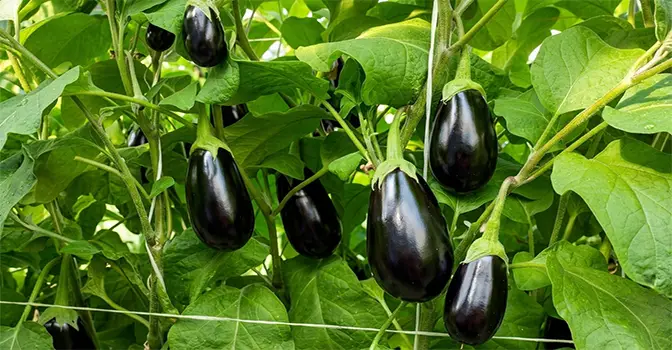
Planting globe eggplant in the greenhouse begins with the selection of seeds and the production of healthy seedlings and continues with the proper management of irrigation, nutrition, temperature, pruning and harvesting. The desired result is obtained when these steps are coordinated with each other; A suitable seed for the market should be selected, the seedling should reach the greenhouse on time and the plant should have suitable conditions for growth and fruit production during the period.
For the farmer who wants to plant globe eggplant for the first time, there are many questions: What seeds to buy? When should we give it to the nursery? What are the characteristics of a good transplant? What is the distance between the bushes? How to water and prune? When is the fruit ready to harvest? And how to calculate the production cost and income of the product?
In this article, we follow the production path from buying seeds to harvesting, packing and selling. The descriptions are written in plain language to be of use to both the novice greenhouse grower and to assist the experienced grower in revising a planting plan.
What is globe eggplant, and how does it differ from long, slender eggplant?
In the Iranian market, “Lampi” usually describes eggplants with a relatively broad, bulky, bulb-shaped fruit. Long, slender eggplants have a narrower, more elongated shape.
Lampi describes a fruit type, not a single variety. Seeds sold under this name therefore do not necessarily belong to the same cultivar or share identical characteristics. Two globe-type cultivars may differ in earliness, plant vigor, fruit size, uniformity and postharvest shelf life.
Eggplant with scientific name Solanum melongena It belongs to the tomato, pepper and potato family and its origin goes back to Asian regions. Its different varieties are selected for different production conditions and markets. Guide to the University of Massachusetts
Globe eggplant is used in many dishes, like other edible eggplant types. For the grower, the key is to match fruit shape, size and quality to customer demand. Larger size alone does not mean better sales.
Before buying seed, understand your market
It is best to start crop planning with the market. Before ordering seed, speak with the prospective buyer: a produce-market trader, wholesaler, retailer, packer or exporter.
Ask these questions:
- What fruit shape and size does the buyer prefer?
- How important is the color and shine of the skin?
- What criteria are used to grade the produce?
- What kind of packaging does it require?
- In what months does he need the product?
- How is fruit outside the preferred size range priced?
- What are the terms of delivery and settlement?
These answers affect cultivar choice, planting dates and harvest timing. If the buyer wants medium-sized fruit, leaving it on the plant to gain weight may reduce the proportion of top-grade produce.
For the first experiment, estimate the income with the usual market price and the amount of salable product. Exceptional prices for a few days of the year are not a good basis for planning an entire production period.
Benefits of growing globe eggplants in the greenhouse
The greenhouse provides the possibility of better management of the environment and prolongation of the production season. Under the right conditions, the eggplant plant produces several times and the sale is not limited to one harvest. The amount of use of this capacity depends on the variety, light, temperature, plant health and the length of the cultivation period. Johnny’s Eggplant Greenhouse Production Guide
For a manufacturer, the benefits to consider are:
Repeated harvests and sales: It is possible to plan for the gradual delivery of the product.
Uniform production: Choosing the right variety and proper management can help produce fruits with a more harmonious shape and size.
Diversity in the production portfolio: Investigating eggplant cultivation, for a complex that produces only one crop, can be part of a sales diversification program.
Ability to manage labor costs: Choosing the right method of plant training, pruning and harvesting can reduce the time to do the work.
Existence of domestic and export sales route: Iranian eggplant has a history of export; Of course, the choice of variety and type of fruit should be in harmony with the needs of the destination market.
Does globe eggplant require less labor?
Labor cost is one of the important parts of greenhouse production cost. For this reason, a product that can be managed with simpler operations and less time is attractive to the farmer.
However, it cannot be said that globe eggplants require less labor than cucumbers, tomatoes or peppers in any situation and with any method. The amount of work depends on the density, the method of guiding the branches, the intensity of pruning, the frequency of harvesting and the method of packing.
In an academic study published in 2024, four-branch pruning in tunnels tested did not significantly increase salable yield. This result shows that some additional operations may create costs without generating more revenue. Of course, this finding is not an order to eliminate pruning in all long-term greenhouses. University of New Hampshire article in HortTechnology
To check the labor advantage in your greenhouse, record this index:
Working hours used ÷ kg of salable product
Count your working time and that of your family members as well. Then determine which activity takes the most time: pruning, guiding the branch, finding fruit among the leaves, carrying the basket, or grading?
Proper aisle, easy access to fruit, ready tools and clear schedule for workers are practical ways to reduce wasted time. Real savings occur when labor costs are reduced and the quality and quantity of salable product is maintained.
First step: selection of globe eggplant seeds
When buying seeds, don’t just pay attention to the picture of the fruit or the package price. The exact name of the variety, the specifications of the producing company and its compatibility with the greenhouse and the market are more important.
| subject | What to check |
|---|---|
| Cultivar name | Full and exact name on the package |
| Suitable environment for cultivation | Greenhouse, tunnel or open space |
| Type of fruit | Expected shape, color and size |
| premature | Appropriateness of harvest start time with sales schedule |
| Course length | Suitability of the variety with short-term or long-term cultivation |
| Resistances | Only features officially announced by the manufacturer |
| Cargo specifications | Number of seeds, manufacturing serial number and package information |
| maintenance | Recommended conditions until delivery to the nursery |
What are the characteristics of HM.CLAUSE JETT F1 globe eggplant seed?

Globe eggplant seed JETT F1 company HM.CLAUSE France, supplied by Rah Nik Kesht, is a very early And it is suitable for greenhouse cultivation. Early maturity is economically important for the farmer; Because in the right conditions, the earlier start of harvest can help start sales faster and return part of the initial production costs. The exact harvest time still depends on seedling quality, planting date, light, temperature and greenhouse management. Eggplant seed at Rah Nik Kesht
For this variety, the manufacturing company has introduced compatibility with protected cultivation, optimal fruit uniformity, maintaining quality until the end of the winter period, good shelf life after harvest, and high yield potential. The size of the fruit is also described according to the needs of the Middle East and North Africa market. JETT F1 official specs
The combination of earliness, fruit uniformity and post-harvest quality make this variety a viable option for growers who value an early start to sales and a regular supply of quality product.
The second step: calculating the number of seeds and ordering seedlings
Determine the number of seeds after the planting plan is determined. First, count the number of planting places and then agree with the nursery on the number of healthy seedlings that can be delivered.
For example, if you have 2,000 planting sites and you plan to have 5% reserve seedlings, you need 2,100 healthy seedlings. If it is expected that 95% of the seeds will become deliverable seedlings, the number of seeds required will be about 2,211.
These percentages are only calculation examples. The actual number should be determined based on the characteristics of the same seed shipment and nursery performance.
When delivering seed, record this information:
- The name of the variety and the producer company;
- number of seeds delivered;
- shipment number;
- planting date;
- Expected seedling delivery date;
- expected number of transplants;
- Arrangements for weak or unusable seedlings.
How long does it take to produce eggplant seedlings?
For initial planning, approx 6 to 8 weeks is a common starting estimate for seedling production. Light, temperature, cell size and the required transplant size can change this period. Oklahoma State University guide to vegetable transplant production
The date of delivery of seedlings should be coordinated with the preparation of the greenhouse. If the greenhouse is not ready and the seedling remains in the tray too much, it becomes more difficult to manage its establishment.
The third stage: planting seeds and keeping seedlings in the nursery
Sow seed in a suitable propagation medium that holds moisture, drains well and provides air to the roots. Ordinary field soil is not suitable for filling seedling trays because it may introduce contamination, compaction or poor drainage.
Match sowing depth to seed size and the supplier’s recommendations. The University of Minnesota gives a depth of about 6 mm for eggplant seed. Keep the medium moist until emergence, but not waterlogged. University of Minnesota Guide
Eggplant needs heat to germinate. In Johnny’s Greenhouse Production Guide, temperatures of approx 27 to 32 degrees Celsius is recommended until emergence. After emergence, adjust the temperature schedule and provide sufficient light. This temperature range applies to germination, not the entire crop cycle. Eggplant greenhouse production guide
Ask the nursery to clearly label the trays. Getting a few photos of growth and root status throughout the course will also help track quality and delivery time.
Step four: How to recognize healthy seedlings
A taller seedling is not necessarily a better seedling. Look for a strong stem, balanced growth and healthy roots. Weak, stretched seedlings or those already carrying flowers and fruit may establish poorly after transplanting. Utah State University Guide
On the day of delivery, check a few trays at random:
- Seedlings should not be very different in terms of growth and size.
- The stems should not be narrow, elongated or lying down.
- Inspect the undersides of leaves for pests.
- There should be no spots or suspicious rot on the leaf and the place where the stem joins the bed.
- The roots should hold the plug together when it is removed from the tray.
- Seedlings should not be broken, withered or left too much in the tray.
A root system that holds the growing-medium plug together is one practical sign that a seedling is ready for transplanting. SARE guide
If pests or disease symptoms are observed, investigate the cause before spreading the trays in the greenhouse. The quality of seedlings affects the start of growth and the uniformity of the whole period.
Step five: Preparing the greenhouse before seedlings arrive
Prepare the greenhouse at the same time as seedling production. Water, soil or substrate, irrigation, heating, ventilation and contamination history should be checked.
Water and soil testing
Clear water is not necessarily suitable for irrigation. Salinity, sodium, chloride and bicarbonate can affect growth and fertilizer choice. Interpret water tests alongside soil or substrate tests. Penn State University Guide to Irrigation Water Testing
Let’s understand two commonly used terms:
EC It is a number to show the amount of dissolved solutes. Its increase can indicate an increase in salinity.
pH It shows the degree of acidity or alkalinity of the environment and affects the root’s access to nutrients.
Do not confuse the EC of source water, nutrient solution and the root-zone medium. These are different samples, and their readings are not necessarily interchangeable.
Examining the history of disease and nematodes
If in the previous planting, the plants were weak in spots, had unusual wilting or knots were seen on the root, take a sample before replanting.
Root-knot nematodes can impair water and nutrient uptake. More fertilizer will not necessarily solve the problem. Grafted seedlings on a suitable rootstock may be worth considering in some systems, but the rootstock must match the damaging organism and greenhouse conditions. University of California Eggplant Nematode Guide
Equipment testing
Run an irrigation test before planting. Compare emitter output at the beginning, middle and end of the lines, and check for blockages, pressure problems and filter performance. Uniform irrigation depends on suitable design and water quality. Penn State Drip Irrigation Guide
Heating, ventilation and sensors should also be ready. The introduction of seedlings should not coincide with major repairs or incomplete preparation of the greenhouse.
The sixth step: determining the density and distance of planting
Eggplant has big leaves. The density should be in harmony with the light, growth strength of the variety, the height of the structure and the method of training the plant.
Separate the two concepts:
Number of plants per square meter and The number of main branches per square meter.
For example, two plants with two main branches will produce four branches; The same two bushes with three branches will have six branches. The number of plants is constant, but the volume of foliage changes.
In the guide hosted at Wageningen University, examples of close to 2 plants per square meter are given for some eggplant systems. This is a useful planning reference, not a universal density recommendation. Guide to Greenhouse Cultivation, Table 4.6
When ordering seedlings, clarify the basis of the area: is the total area of the greenhouse with aisles calculated, or only the area of the bed? Mixing these two bases will make the required number wrong.
Step seven: Transplanting into the production area
Transfer the seedling when the air conditions of the greenhouse and the root environment are suitable for growth. Eggplant is sensitive to cold and rushing to plant in a cold environment can delay establishment.
On the day of transfer:
- The seedling plug should be adequately moist.
- Remove the seedling with its root plug intact; do not pull the stem.
- The hole should be big enough for the root to fit inside it without pressure.
- For ungrafted seedlings, keep the planting level close to the original level of the growing medium.
- Gently firm the soil around the roots and water to help establishment.
- For grafted seedlings, keep the graft union above the soil or substrate.
Keeping the root and transplanting at a less stressful time of day helps reduce transplant damage. University of Minnesota transplanting guide
In the first days, follow the new growth of the plants. If a few plants are left weak, check the moisture around the roots, the drip outlet and the health of the roots before adding fertilizer.
Eighth step: temperature, light and humidity management
The appropriate temperature is not the same in all stages. Germination stage, seedling establishment and full fruiting have different needs.
For example, Johnny’s guide recommends approximately 22°C by day and 19°C at night at the start of fruit set and, under full fruit load, approximately 20–22°C by day and 17–19°C at night . These are examples from one greenhouse program and must be adjusted to light, cultivar and local conditions. Eggplant greenhouse climate guide
For daily management:
- Measure the temperature near the height of the plant.
- Record the lowest temperature at night and the highest temperature during the day.
- On a cloudy day, revise the temperature and watering schedule.
- Pay attention to the formation of dew and the persistence of moisture on the leaves.
- Check the air movement between the plants.
- Do shading according to heat and light.
A sensor placed next to a door or near a heater may not indicate the condition of most plants. Making decisions based on regular measurement is more reliable than just judging by feel.
Ninth step: Irrigation of globe eggplant
The amount of water required for all greenhouses is not the same. A small bush and a fruitful bush, a cloudy day and a sunny day, and light and heavy soil, require a different program.
Irrigation in soil cultivation
The goal is to maintain relatively uniform moisture in the root zone and prevent prolonged soil saturation. The drying of the soil surface alone does not indicate that the roots need water.
If the plant is wilted but the soil remains wet, more water may aggravate the problem. Root rot intensifies in conditions of poor drainage and soil saturation; Therefore, it is necessary to check the roots and water management. University of California Guide to Eggplant Root Rot
Irrigation in soilless cultivation
in cocopeat, perlite and similar substrates, in addition to the incoming water, the drainage, that is, the water that leaves the substrate, must be checked. Do not directly transfer the soil cultivation program to this system.
Water quality is very important in the limited volume of the bed. Accumulation of solutes in the root environment can damage growth; Therefore, EC and pH monitoring is part of the management of this system. Greenhouse Water Quality Guide, Government of Saskatchewan
Do not consider eggplant as a product indifferent to saltiness. Greenhouse studies have shown that increasing salinity can reduce its growth, water consumption and yield. Academic study in partnership with the USDA Salinity Laboratory
The tenth stage: feeding and fertilizing
Base nutrition on water and soil or substrate tests, plant condition and fruit load. A fertilizer name or the label “for eggplant” is not enough to determine an application rate.
Early in the crop cycle, aim for healthy, balanced plants. Nutrient demand changes as fruit load increases. FAO notes increased potassium demand with increasing fruit load; this does not mean omitting other nutrients or applying potassium excessively. FAO guide; Eggplant nutrition in soilless cultivation
| stage | An important issue in the follow-up of nutrition |
|---|---|
| Establishment of seedlings | Root health, new growth and plant uniformity |
| Growth and beginning of flowering | Balance between leaves, branches and fruit formation |
| Continuous harvesting | Fruit filling, continued growth and salinity control |
A very leafy bush is not necessarily a fruitful bush. Excessive use of nitrogen can increase the growth of leaves and branches and delay fruiting. Guide to the University of Massachusetts
Any yellowing of leaves is not a lack of fertilizer. Damaged roots, improper water, pests and environmental conditions can cause similar symptoms. Determine the cause before drastically changing the fertilization schedule.
Eleventh step: guiding the branches and pruning the bush
As the plant grows and the weight of the fruit increases, the branches need proper support. The guidance method should be coordinated with the density and length of the course from the beginning.
In long-term cultivation, it is common to keep several main branches and guide them with thread. For example, in a part of the eggplant cultivation guide, FAO suggests the cultivation of two or three branches and about four to six branches per square meter. FAO guide
Plant training means choosing a few suitable branches to continue growing and managing the growth of other branches according to the plan.
In one common method, the main branch and a strong side branch near the first flower are bifurcated. Flowers and fruits can be kept on some other side branches and limit the growth of the branch after the place of flowers. Therefore, removing all side branches is not a suitable command for all systems. Guide to the University of Vermont
Twine and clips must not constrict the stem. Check the supports as stems thicken. Suitable equipment and correct installation both matter. For more information, see the guide to greenhouse twine quality .
Do not remove healthy leaves unnecessarily. Proper leaf cover protects the fruit, and exposing the fruit to strong sunlight can cause damage. University of Massachusetts
The twelfth stage: flowering and fruit formation
If there are many flowers but few fruits are formed, check the growth conditions before using any solution.
Eggplant flower is capable of self-pollination, but fruit formation is still affected by temperature, humidity and light. Some cultivars can produce fruit without pollination, but this feature should not be attributed to all cultivars without confirmation from the manufacturer. HortTechnology article about eggplant greenhouse varieties
When the flower falls abnormally:
- Check the recorded day and night temperatures.
- See the fluctuation of irrigation and root condition.
- Assess the light and crowding of the foliage.
- Check the balance of leaf growth and load.
- Check the flower and the underside of the leaf for pests.
If assisted pollination is needed, choose a method appropriate to the cultivar and greenhouse system. Unsupervised use of fruit-setting stimulants is not a substitute for correcting unsuitable growing conditions.
Thirteenth stage: Management of pests and diseases
Regular visits are a constant part of greenhouse management. Don’t wait for infestation to be seen from afar.
Aphids, whiteflies, thrips, mites, and some root and viral diseases are some of the problems that can be investigated in eggplant. The diagnosis of each case should be based on the symptoms and examination of the same greenhouse. University of California Eggplant Pest Management Guide
| sign | Initial review |
|---|---|
| Yellowing with fine webbing | Inspect leaf undersides for mites |
| White insects fly by shaking the bush | Check for whiteflies |
| Wilting despite wet soil | Examination of root, drainage and crown |
| Spotted weakness and knot on the root | Nematode investigation |
| Abnormal discoloration or spotting | Preparation of photos and samples for diagnosis |
The mite can reduce the active surface of the leaf and cause leaf fall in severe infestation. It is important to check the underside of the leaf and identify the primary foci. University of California Eggplant Mite Guide
Sticky card It is useful for monitoring some flying insects, but it does not take the place of examining leaves and flowers. The combination of plant visits and monitoring tools gives a more accurate picture of the infestation situation. University of Connecticut Guide
Record the date, location and type of control action. Choose pesticides and observe preharvest intervals according to the valid product label and professional advice, especially while harvesting continues.
Fourteenth step: Time to start harvesting
The time of the first harvest depends on the cultivar, seedling age, light, temperature and management. The precocity of the variety is one of the effective factors; But it alone does not determine the harvest date.
For general timing, the University of Missouri gives a range of about 65 to 90 days after transplantation . This is not a cultivar-specific harvest time for very early JETT F1 and is not a promise for all Iranian greenhouses. University of Missouri Eggplant Production Guide
Including the nursery period, the several-month gap between seed planting and the first sale should be included in the liquidity plan. Cold or low light conditions can delay harvest.
| section | A sign of progress |
|---|---|
| nursery | Uniform greening and production of healthy seedlings |
| After transfer | Establishment and growth of new leaves |
| Start of fruiting | Formation and growth of primary fruits |
| First harvest | Reaching market size fruit while maintaining quality |
| Continuous harvesting | Continued growth and fruit formation with regular picking |
To determine the planting time, put the characteristics of the variety together with the experience of similar greenhouses in the region. Do not transfer the calendar from one region to another without checking.
Fifteenth step: Identifying the fruit ready for harvest
Eggplant for consumption is harvested before the seeds are fully ripened. Shiny skin, relatively firm texture and suitable size for the market are important signs. Darkening of the skin and browning of the seeds can be a sign of late picking. University of Missouri
During the first few harvests, open a few fruits to compare the external appearance with the condition of the flesh and seeds. This will help the harvesting team to better understand the appropriate stage of picking.
At harvest:
- Use sharp and clean scissors.
- Do not pull or twist the fruit.
- Keep the sepals and fruit tail healthy.
- Do not throw the product into the basket.
- Avoid too much pressure of fruits on each other.
- Remove injured or suspicious cargo.
Harvesting with a sharp cutting tool and handling fruit gently reduces damage. University of California Davis Postharvest Center
Coordinate the harvesting frequency with the growth rate and size desired by the buyer. The remaining ready fruit on the plant reduces its quality and can affect the continuation of production. Guide to the University of Maryland
Sixteenth step: Grading, packaging and storage
After harvesting, do not leave the product in the heat of the greenhouse. Move the baskets to the right place and protect them from the sun and pressure.
University of California Davis for eggplant storage, temperature approx 10 to 12 degrees Celsius and relative humidity 90 to 95 percent suggests Eggplant is sensitive to cold below 10 degrees and improper storage can cause spots, dents and browning of the tissue. The shelf life is usually short and less than two weeks. Eggplant post-harvest guide
In grading, check shape, size, skin health and overall quality. Mixing very different fruits in one package makes it difficult to assess quality and pricing.
The packaging should prevent skin abrasion and pressure on the fruit and allow proper air passage. If washing is done, water quality and equipment hygiene are important. Penn State University Postharvest Water Guide
Iran’s eggplant export and the opportunity of globe eggplant
Based on the data World Bank WITS and UN Comtrade for 2023Iranian exports of fresh or chilled eggplant were recorded at approximately 190 thousand tons . Iraq, Russia, Afghanistan, the United Arab Emirates and Azerbaijan were among the main destinations that year. Iran eggplant export statistics in 2023
This statistic includes the total of fresh eggplants and does not show the share of bulb type or greenhouse product separately. However, it confirms the existence of a commercial route for the export of Iranian eggplant.
For export production, clarify the following with the buyer before planting:
- the desired shape and size of the fruit;
- health and appearance criteria;
- type and weight of packaging;
- delivery schedule;
- transportation and storage conditions;
- Pesticide-residue requirements and documents required by the destination market;
- Acceptance, return and settlement conditions.
In the UNECE commercial standard, health, cleanliness, freshness, appropriate firmness, absence of rotting and not overgrowing seeds are quality indicators of eggplant. This standard is useful for recognizing commercial quality; The conditions of each market and contract should be checked separately. UNECE FFV-05 standard
Before increasing the area of export cultivation, it can be useful to check a test shipment at the destination. Buyer feedback on wear, softness, size, and durability provides actionable information to refine harvest and packaging.
How to calculate the cost and profit of growing globe eggplants?
Base the calculation on the weight of the salable product. All harvested produce is not necessarily sold at the same price.
| cost group | sample |
|---|---|
| Start of cultivation | Seed, nursery, preparation and experiments |
| maintenance | Water, fertilizer, energy, pest control and repairs |
| Labor | Planting, guiding, pruning, harvesting and packing |
| sale | Basket or carton, shipping, commission and drop of cargo |
| Fixed cost | Rent, depreciation and capital cost |
The cost of each kilo of salable product = the total cost of the period ÷ the weight of the salable product
Calculate revenue from actual sales, allowing for produce grades, prices for each shipment and deductions.
Before planting, prepare low, typical and favorable sales scenarios. Vary the proportion of top-grade produce, selling price and energy cost. A plan that is profitable only at the highest market price has little margin for error.
When comparing seeds, look beyond pack price. The proportion of usable seedlings, harvest timing, uniformity, marketable yield and production cost per kilogram all matter.
Simple daily and weekly management program
Recording the information helps the farmer to find the cause of the changes and to plan the next period more accurately.
Every day: Check for minimum and maximum temperatures, irrigation status, equipment performance, abnormal wilting and fruits ready for harvest.
Several times a week: See the backs of leaves and flowers, inspect thread and clip connections, and record foci of contamination.
Every week: Write down the harvest weight by grade, labor hours, main costs and the reason for removing the product.
After any major change: Track the results of changing watering, feeding, pruning or control measures. Making several large changes at once makes it difficult to determine the cause of improvement or decline.
At the end of the crop cycle, summarize marketable yield, average selling price, labor cost and the main problems. These records are more useful for choosing the next cultivar and crop plan than isolated observations or informal recollections.
Common questions about planting globe eggplants
Is the globe eggplant the name of a certain variety?
No. Lampi describes a fruit shape and type. When buying seed, identify the exact cultivar and producer.
Are JETT F1 eggplant seeds early?
HM.CLAUSE JETT F1 is presented by Rah Nik Kesht as a very early variety. Actual harvest timing also depends on nursery conditions, planting date and greenhouse management.
Can globe eggplants be produced without pruning?
The appropriate method depends on the type of greenhouse, the length of the period, the density and the system of maintaining the branches. In some systems, more limited pruning is appropriate; In long-term crops, management of branches and access to fruit becomes more important.
Why does the plant grow a lot, but it gives little yield?
Light, temperature, irrigation, nutrition, root health and fruit formation conditions should be checked. Leafiness alone is not a sign of proper management.
Is a bigger fruit more profitable?
When the market demands that size and the quality is maintained. The main criterion is the income of the salable product.
Is globe eggplant suitable for export?
If the variety and size of the fruit are coordinated with the buyer’s order and the quality is maintained during harvesting, packaging and transportation, it can be considered as an option. The export plan must be coordinated with the destination market before planting.
What is the most important point for the first cultivation?
Choose the right variety for greenhouse and market conditions, receive healthy seedlings and record production information from the first day. These three tasks are the basis of better decisions throughout the course.
For details of the very early HM.CLAUSE JETT F1 variety and to coordinate seed purchasing with your seedling-production schedule, visit Rah Nik Kesht greenhouse globe eggplant seed .


