




Quality Greenhouse Twine: Durability, Cost and ANSA T1800
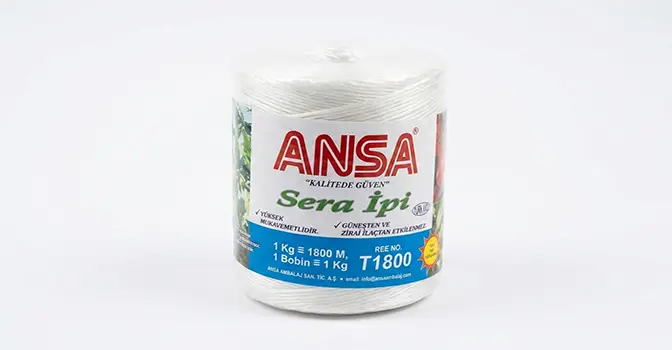
Differences between twines may be hard to see when greenhouse plants are small. As stems grow, foliage develops and fruit clusters become heavier, twine quality matters more. Breakage or excessive elongation can disrupt plant support.
Buying greenhouse twine involves more than comparing roll prices. Consider its performance throughout the crop cycle, its specifications and the actual cost of use.
Why does greenhouse twine quality matter?
In vertical cultivation, twine is part of the plant support system. If it fails, a plant may fall or bend and its stem or fruit may be damaged, depending on the plant and the other attachments. ANSA’s technical guide also identifies fallen plants as a possible consequence of twine failure in high-wire cultivation. Source: ANSA technical guide
The economic consequence is not limited to the cost of a piece of twine. Inspecting plants, reinstalling supports, correcting attachments and dealing with damaged produce require time and money. The cost depends on the damage and greenhouse conditions, but it should be considered alongside the purchase price.
Quality twine should suit the greenhouse conditions and crop cycle and provide reliable plant support.
What problems can unsuitable twine cause?
Twine breakage and loss of plant support
Twine without adequate strength for the intended application is unsuitable for supporting a fruit-bearing plant. Plant weight, handling and lowering operations all matter. ANSA’s selection guide identifies crop load, handling forces and the deterioration of properties during use as relevant factors. Source: ANSA greenhouse twine selection guide
Loss of support may require immediate attention. Replacing the twine will not necessarily undo damage to a stem or fruit cluster. Select suitable twine before the plants become heavily loaded.
Loss of durability under light exposure
Initial strength is only one aspect of quality. Twine must also suit the environment in which it will be used.
A study published in Materials, involving researchers at the University of North Texas, found that ultraviolet exposure under laboratory conditions can degrade unstabilized polypropylene and make it brittle. Suitable additives also affect the retention of its properties. This was not a direct test of ANSA twine, but it illustrates why UV protection matters. Source: Study of UV stabilizers in polypropylene
When buying UV-protected greenhouse twine, ask about its recommended applications and durability information. A sound appearance at the start of use does not, by itself, establish performance throughout the crop cycle.
Elongation and the need for readjustment
Unwanted elongation can change a plant’s position and require adjustments to its height or attachments. Assessing behaviour under load is part of selecting suitable twine.
For a more meaningful comparison, ask what technical information supports a claim of low elongation and which conditions the product is recommended for.
Stem damage at contact points
Not all stem damage is caused by the twine material: installation also matters. University of Florida guidance explains that winding a tomato stem around twine can cause stress and abrasion damage. It also recommends a loose initial tie at the base of the plant and avoiding clip placement at a flower cluster attachment point. Source: University of Florida guide
Suitable twine and correct installation go together. Even a quality product cannot prevent all damage when attachments are incorrect.
How can you assess greenhouse twine quality?
Rather than relying on appearance or a premium-quality label, compare these criteria:
- Strength appropriate to the application: The twine should be suitable for supporting the crop under the intended conditions.
- UV protection: Check the manufacturer’s information about durability under light exposure.
- Behaviour under load: Elongation and the possible need for readjustment matter.
- Clearly specified length: The twine length must be known to calculate purchasing quantities and cost per metre.
- Compatibility with clips and hooks: Twine and attachments must work correctly together.
- Traceable specifications: The model and supplied product information should match the manufacturer’s specifications.
Hand testing and visual inspection may reveal obvious defects, but they do not replace technical information or durability assessment. For bulk purchases, request a sample and check compatibility with greenhouse equipment.
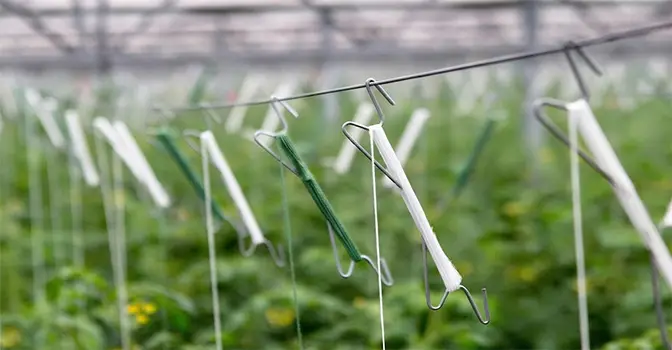
Features of ANSA greenhouse twine from Türkiye
On its official greenhouse twine page, ANSA describes the product as suitable for supporting pepper, cucumber, tomato and eggplant plants. UV protection, high load-bearing capacity and low elongation are manufacturer-stated features. Source: Official ANSA greenhouse twine page
Specifications for model T1800 are:
- Length per kilogram: 1,800 metres
- Weight per roll: 1 kilogram
- Length per roll: 1,800 metres
- Colours offered by the store: Blue, green and white
Weight and length figures are based on the manufacturer’s published specifications. Check the available model’s specifications and colour when ordering.
Clear specifications help buyers calculate quantities and usage costs. Final selection should also account for crop-cycle length, the training system and greenhouse equipment.
Is paying more for quality twine worthwhile?
To compare options, convert the purchase price into a usage cost:
Cost per metre of twine = roll price ÷ usable length in metres
Then calculate twine cost per stem using the required length. Also consider installation time, waste and potential repair or replacement costs.
A hypothetical example: if a more suitable twine costs an additional 1,000 tomans per stem, the difference for 1,000 stems is one million tomans. If twine failure causes damage and extra work costing more than that, the initial saving disappears.
This example does not establish any brand’s actual failure rate or savings. It only demonstrates a comparison method. Record your own greenhouse’s usage history and actual costs for a more informed decision.
Economical twine meets the technical needs of the crop cycle as well as offering a reasonable price.
Five questions to ask before buying greenhouse twine
- What is the exact product model, and where are its specifications published?
- What is the usable length of each roll?
- Which crops and operating conditions is the product recommended for?
- What information does the manufacturer provide about durability and light protection?
- Is the twine compatible with my clips, hooks and crop-training system?
Check the condition of the other support components too. Alabama guidance states that a greenhouse structure should carry crop trellis loads only if it was designed to do so. Strong twine is no substitute for an adequate supporting structure. Source: Alabama greenhouse tomato production guide
Frequently asked questions about greenhouse twine
Is thicker twine necessarily better quality?
Visible thickness alone is not enough to make a selection. Consider specifications, durability, length and suitability for the application together.
Does UV-protected twine last indefinitely?
No. UV protection does not mean unlimited service life. The period of use must suit the manufacturer’s information and actual greenhouse conditions.
Is imported twine always better than Iranian twine?
Country of origin alone does not establish quality. Compare domestic and imported products using technical specifications, traceability and verifiable performance.
What is the main reason to choose quality greenhouse twine?
More reliable plant support and a lower risk of costs arising from failure. Assessing twine price alongside the value of the crop it supports leads to a better-informed purchasing decision.
Obtain the product specifications and calculate the cost of use over a crop cycle. Durability, technical suitability and correct installation are practical criteria for choosing greenhouse twine.
Related products: Plant Clips · Greenhouse Twine · Metal Support Hooks


